
Con su amable permiso
1940
No user ratings available yet
Representation score: 1.9 out of 10
Representation Score
Fair
1943
Director
Fernando Soler
Runtime
104 minutes
Average Rating
No ratings yetNew Showbiz Analysis
This 1943 production exemplifies the traditional narrative and social structures of Golden Age Mexican cinema. The plot centers on male-driven social maneuvering and the preservation of familial wealth and status. While the film features a diverse cast relative to Anglo-centric standards, it does not aim to disrupt existing hierarchies. Instead, it reinforces conventional gender roles and uses medical conditions as plot devices rather than meaningful representations. Ultimately, the film serves as a period piece mirroring the demographic and social homogeneity of its time, offering limited modern multi-layered depth.
Category Breakdown
The film does not include any queer narratives or non-straight identities. Romantic relationships are confined to traditional heterosexual norms.
The story emphasizes male social interactions and ability to act. Women appear mainly as cabaret singers and showgirls, often defined by their romantic involvement with the male lead.
The cast includes a mix of non-Anglo-Saxon actors reflecting the demographics of the 1940s Mexican film industry. However, it does not actively seek to disrupt ethnic hierarchies.
The narrative highlights traditional social structures such as family and inheritance. It operates within established social classes without challenging Western or capitalist norms.
A kidney ailment serves as a plot device for a hoax. Medical conditions are used as simple plot devices rather than nuanced representations of lived experiences.
Present on Screen
Limited or Absent
Official Synopsis
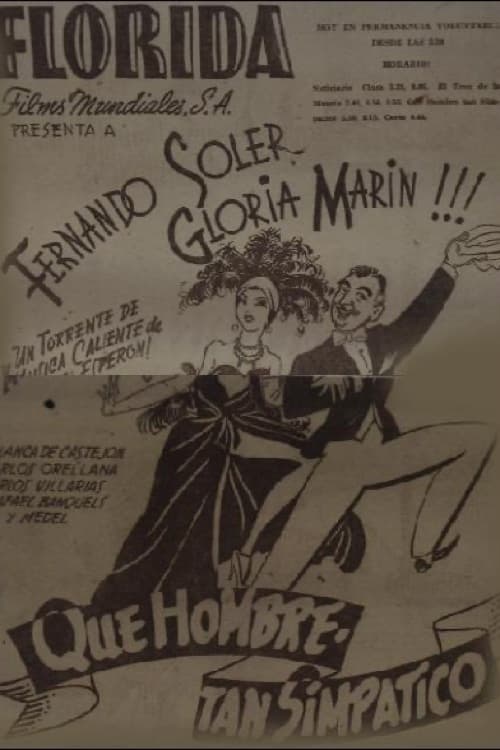
Amable is the drinking buddy of Paquito, a former medical student who plays Fanny's love, a cabaret singer and also with Conchita, a showgirl. One day, Paquito receives a telegram that his uncle Pancho vayaa asked to see his wife and other medical eminence to heal him his kidney ailment. Among all a hoax to mount Paquino not lose the inheritance from his uncle.
1940
1940

1942
1940
1941

1962
1948
1939
No reviews yet. Be the first to share your thoughts on this movie!
Use the rating form above to leave a star rating and optional review.