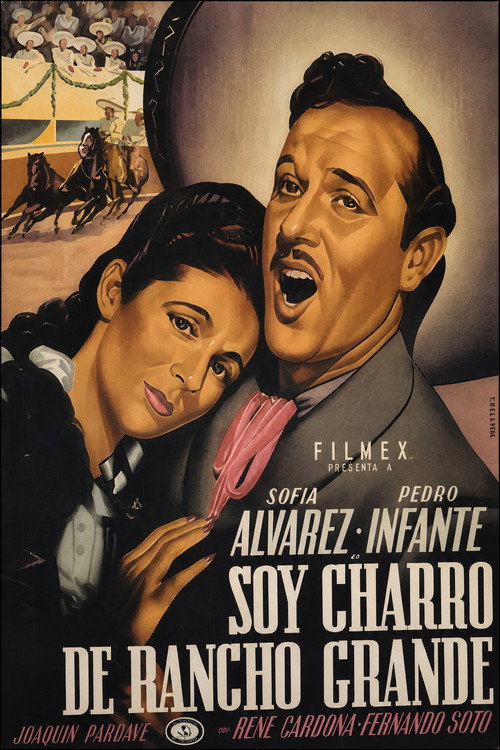
Soy charro de Rancho Grande
1947
No user ratings available yet
Representation score: 0.9 out of 10

Representation Score
Minimal
1941
Director
José Benavides hijo
Average Rating
No ratings yetNew Showbiz Analysis
Lo que el viento trajo is a product of the Mexican Golden Age, a period defined by highly structured social hierarchies and conventional moral frameworks. The film's narrative structure appears designed to uphold traditional societal structures rather than challenge them. Because the era prioritized the sanctity of the family unit and established social orders, the film lacks modern multi-layered depth. The absence of specific character arcs or subtextual evidence suggests a reliance on the era's standard, conservative storytelling formulas. Ultimately, the film serves as a reflection of its time, focusing on regional representation and traditional values rather than progressive identity expression.
Category Breakdown
The film likely follows strict conventions that assume everyone is straight or cisgender. There are no documented instances where LGBTQ+ identities or non-straight relationships are explored.
While featuring prominent actresses like Elvia Salcedo, the film likely reinforces traditional gender roles. There is no evidence of women playing a significant role in driving the plot through intellectual or physical superiority.
As a Mexican Golden Age production, the cast is inherently non-Anglo-Saxon. However, the film lacks specific details regarding the way different parts of someone's identity overlap or disrupt racial hierarchies.
The production likely promotes traditional Western and Catholic values. It functions as a reinforcement of the social status quo rather than exploring secularist or anti-institutional themes.
There is no documented evidence regarding the portrayal of physical or neurodivergent characters in this work.
Present on Screen
Limited or Absent
Official Synopsis
A 1941 film.
1947

1962
1946
1940
1975
1948

1974
1950
No reviews yet. Be the first to share your thoughts on this movie!
Use the rating form above to leave a star rating and optional review.