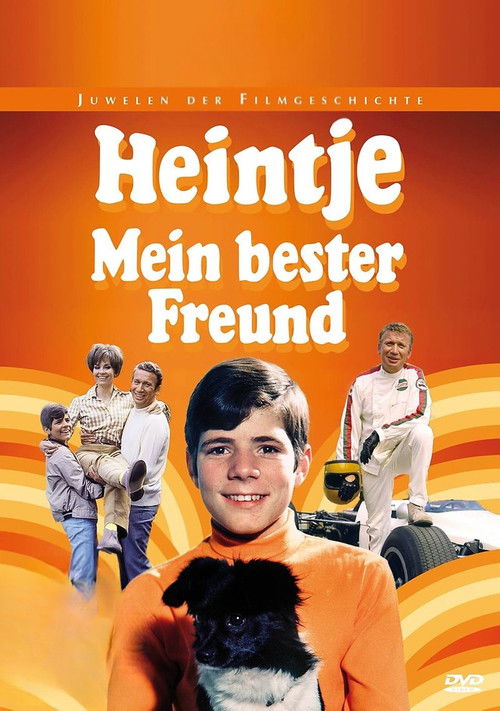
Heintje - Mein bester Freund
1970
No user ratings available yet
Representation score: 0.3 out of 10
Representation Score
Minimal
1970
Director
Hans Heinrich
Runtime
98 minutes
Average Rating
No ratings yetNew Showbiz Analysis
This film is a traditionalist narrative that prioritizes domestic stability and patriarchal lineage. The plot centers on a male-driven arc where a son works to prove his father's innocence, reinforcing conventional social hierarchies of the era. The production lacks diverse or subversive representation, adhering to established genre clichés and a homogeneous social environment.
Category Breakdown
The film operates within traditional social structures and does not feature any LGBTQ+ representation or non-assuming gender matches what was assigned at birth identities.
The story revolves around male familial dynamics, featuring a father, son, and grandfather. Female characters are limited to a deceased mother, emphasizing a patriarchal lineage.
The story depicts a homogeneous social environment typical of 1970s West Germany, with no indication of racial or ethnic diversity.
The plot highlights familial reconciliation and the restoration of innocence, aligning with traditional Western values about the sanctity of the family unit.
Disability is not used as a central narrative device, and there are no explicit mentions of physical or neurodivergent traits.
Present on Screen
Limited or Absent
Official Synopsis
When the bank clerk Klaus Helwig is arrested on suspicion of embezzlement, his son Heintje, whose mother died at birth, comes to his grumpy grandfather's house. Heintje manages to win his heart and prove his father's innocence..
1970
1937

1964

1962

1962

1999
1956
1935
No reviews yet. Be the first to share your thoughts on this movie!
Use the rating form above to leave a star rating and optional review.