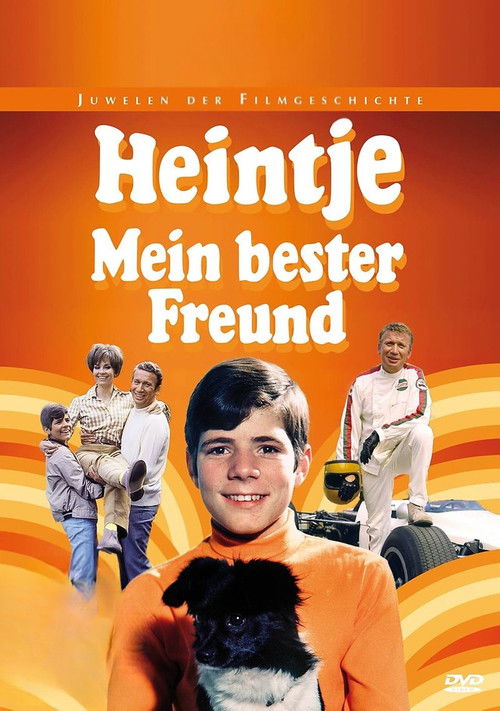
Heintje - Mein bester Freund
1970
No user ratings available yet
Representation score: 0.3 out of 10

Representation Score
Limited
1964
Director
Franz Antel
Runtime
0 minutes
Average Rating
No ratings yetNew Showbiz Analysis
Die große Kür is a product of its time, serving as a mid-century musical comedy aimed at providing escapism. The film prioritizes conventional entertainment and traditional family values over social subversion. Its narrative structure reinforces established social norms rather than challenging existing hierarchies. The production reflects the uniform casting and traditional gender roles typical of 1964 European cinema. Ultimately, the film focuses on social stability and mainstream appeal rather than characters who reflect more than one aspect of diversity or the deconstruction of systemic power dynamics.
Category Breakdown
The film follows the traditional assumptions of 1960s European cinema, where everyone is assumed to be straight and cisgender. There is no exploration of non-traditional sexual identities or critiques of traditional sexual norms.
Women in the film likely follow established social roles. They may have some control over their actions, but the film does not challenge traditional gender roles or disrupt patriarchal structures.
Reflecting the German-language film industry of the early 1960s, the casting appears uniform. There is no indication of diverse casting or exploring multiple aspects of identity.
The narrative likely upholds traditional social cohesion and conventional morality. It operates within a framework that emphasizes social stability and does not offer critiques of Western institutions.
There is no documented evidence of neurodivergent or physically disabled characters having significant control over their lives. Disability is not a central theme in the film’s character development.
Present on Screen
Limited or Absent
1970
1956

2008

1968
1970

1972

1962

2017
No reviews yet. Be the first to share your thoughts on this movie!
Use the rating form above to leave a star rating and optional review.