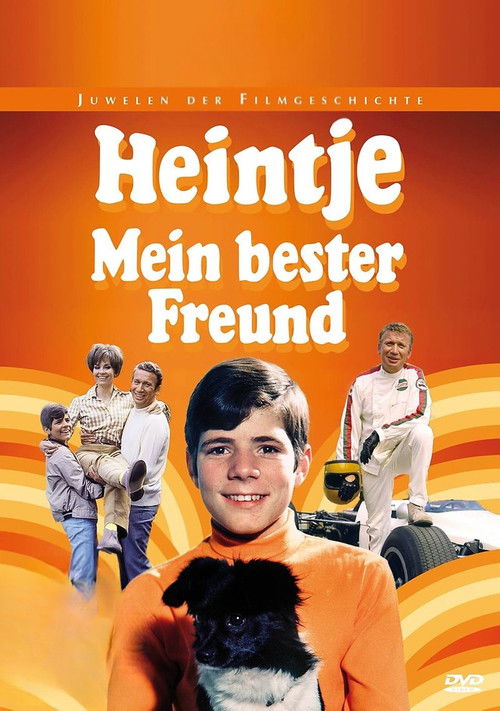
Heintje - Mein bester Freund
1970
No user ratings available yet
Representation score: 0.3 out of 10
Representation Score
Minimal
1956
Director
Norbert Schultze
Runtime
73 minutes
Average Rating
No ratings yetNew Showbiz Analysis
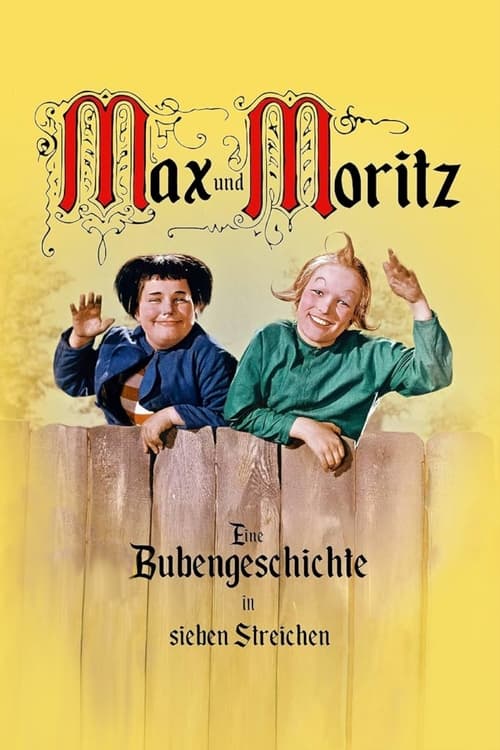
Max und Moritz (1956) is a product of its era, functioning as a conventional family film that mirrors mid-20th-century social norms. The narrative focuses on traditional hierarchies and a homogeneous European demographic, offering almost no multi-layered variety. The film lacks representation for LGBTQ+ identities and provides minimal racial or ethnic diversity. It centers on a localized German tale that reinforces established social orders rather than challenging them. Ultimately, the production serves as a traditionalist adaptation of Wilhelm Busch's work, prioritizing mid-century cultural standards over inclusive storytelling.
Category Breakdown
The film lacks any LGBTQ+ characters or narratives, adhering to the social constraints and traditional depictions typical of 1956 German family cinema.
Male characters play a significant role in driving the story, while female roles are relegated to secondary or domestic capacities.
The setting and casting reflect a homogeneous European demographic. There is little to no representation of different backgrounds or cultures.
The story operates within a conventional moral framework, reinforcing established social orders and traditional family structures.
There is no evidence of characters with visible or invisible disabilities. Such characters are not used as narrative devices.
Present on Screen
Limited or Absent
1970

1964
1968
2008
1972
2005
1993
1970
No reviews yet. Be the first to share your thoughts on this movie!
Use the rating form above to leave a star rating and optional review.