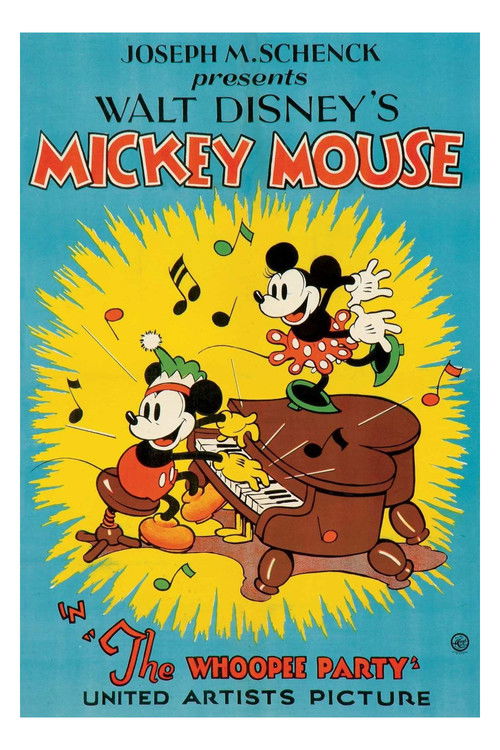
The Whoopee Party
1932
No user ratings available yet
Representation score: 0.4 out of 10
Representation Score
Minimal
1931
Director
Rudolf Ising
Runtime
7 minutes
Average Rating
No ratings yetNew Showbiz Analysis
This 1931 short functions as a rhythmic musical comedy typical of the early sound era. It relies on anthropomorphic characters and standard courtship clichés to drive its brief narrative. The film reflects the social hierarchies of its time, prioritizing slapstick and musical entertainment over complex character development. It adheres to the traditional storytelling common in early American animation. While the inclusion of a jazz orchestra provides a specific cultural backdrop, the work lacks the depth needed to explore multi-layered identities or systemic social critiques.
Category Breakdown
The film portrays a traditional romantic relationship between Piggy and his girlfriend. There is no indication of non-straight relationships or critiques of the assumption that everyone is straight.
The story follows a conventional courtship cliché where a male character initiates a social outing. These roles align with standard early-century gender stereotypes.
The focus is on anthropomorphic animals rather than human racial dynamics. A jazz orchestra is featured, but there is no indication of a predominantly non-white cast.
The setting suggests a celebration of contemporary urban leisure through musical comedy. It operates within the cultural norms of the 1930s without challenging traditional norms.
There is no evidence of characters with visible or invisible disabilities. The context does not show any representation of disability within the work.
Present on Screen
Limited or Absent
Official Synopsis
Piggy picks up his girlfriend and takes her to a theater where a hot jazz orchestra is playing.
1932
1931
1933
1931
1932
1934
1930

1928
No reviews yet. Be the first to share your thoughts on this movie!
Use the rating form above to leave a star rating and optional review.