
Pedro Will Hang
1941
No user ratings available yet
Representation score: 0.2 out of 10
Representation Score
Minimal
1941
Director
Kurt Hoffmann
Runtime
92 minutes
Average Rating
No ratings yetNew Showbiz Analysis
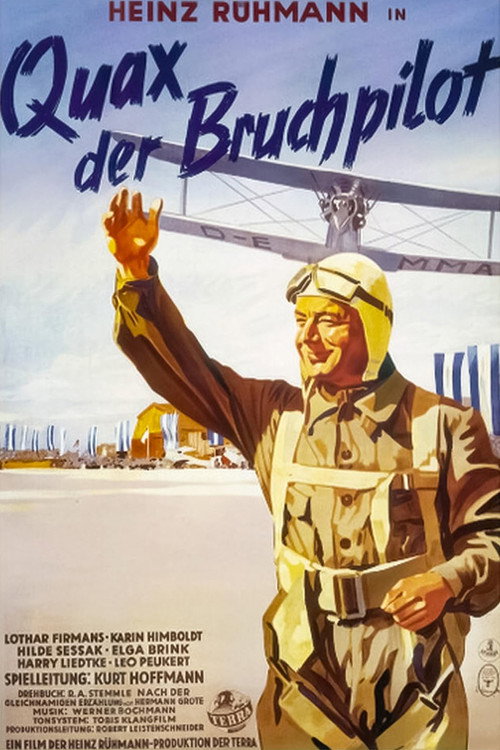
Quax, der Bruchpilot is a traditional narrative reflecting the social and hierarchical norms of the Third Reich. The film lacks complexity in its portrayal of identity, focusing instead on a straightforward character arc that promotes discipline and conformity. By emphasizing technical mastery and alignment with the state, the film adheres to conventional expectations and traditional hierarchies. It does not challenge or disrupt these norms. Overall, the film reflects the demographic and social constraints of 1941, presenting a uniform identity as the norm for its audience.
Category Breakdown
The film does not depict any LGBTQ+ identities or stories outside of traditional heterosexual relationships. The social world shown in the film is strictly based on the assumption that everyone is straight.
Aviation is portrayed as a male-dominated field emphasizing male camaraderie. Female characters are mainly seen as romantic interests or homemakers, playing minor roles.
The entire cast is made up of white Germans, showing no diversity in race or ethnicity.
The story emphasizes order and duty, aligning individuals with a structured hierarchy. It supports the social norms of its time.
The film does not include any characters with visible or invisible disabilities. The plot centers on physical and technical skills needed for flying.
Present on Screen
Limited or Absent
1941
1991
1947
1940
1943
1943
1947
1941
No reviews yet. Be the first to share your thoughts on this movie!
Use the rating form above to leave a star rating and optional review.