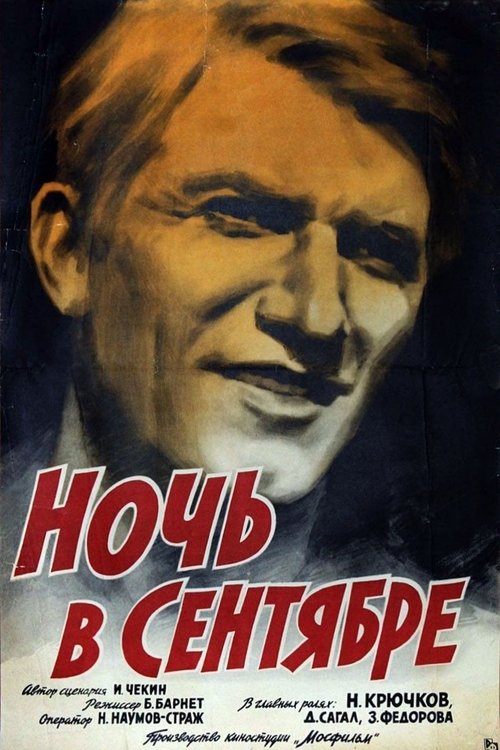
A Night in September
1939
No user ratings available yet
Representation score: 3.7 out of 10

Representation Score
Minimal
1956
Director
Boris Barnet
Runtime
91 minutes
Average Rating
No ratings yetNew Showbiz Analysis
Boris Barnet's *Poet* serves as a piece of Soviet propaganda, emphasizing collective revolutionary goals over individual exploration. While it lacks diverse representations of race, gender, and sexuality, it offers a strong critique of Western individualist models of art. The film's strength lies in its cultural stance, but this focus narrows the range of human identities represented.
Category Breakdown
The film does not include any representation of LGBTQ+ identities or same-sex relationships, sticking to traditional social norms.
Female characters are mainly portrayed as supportive or emotional figures, adhering to conventional mid-century gender roles and hierarchies.
The casting is largely uniform, reflecting a specific Slavic and Soviet demographic without any ethnic diversity or non-human metaphors for race.
The film highlights an anti-capitalist and anti-Western framework, validating artistic identity through service to the Communist cause and the glorification of Lenin.
There is no representation of physical, sensory, or neurodivergent identities. Characters are defined by their ideological function rather than diverse lived experiences.
Present on Screen
Limited or Absent
Official Synopsis
Soviet propaganda film about communists plotting a violent attack on a Russian city. A local poet helps the communists and they glorify his poem about Lenin.
1939

1930
1972

1925

1963
1995
1918
1950
No reviews yet. Be the first to share your thoughts on this movie!
Use the rating form above to leave a star rating and optional review.