
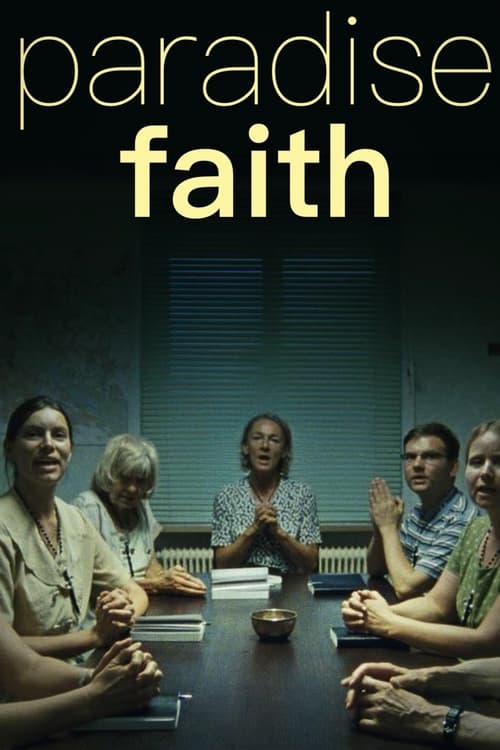
Faith
2010
No user ratings available yet
Representation score: 6.4 out of 10
Representation Score
Excellent
2013
NRDirector
Ulrich Seidl
Runtime
109 minutes
Average Rating
No ratings yetNew Showbiz Analysis
Ulrich Seidl's work dismantles social and religious certainties through a clinical, hyper-realistic lens. The film successfully challenges traditional gender roles by portraying older women as active and desiring subjects. It also provides a nuanced critique of institutionalized structures through moral relativism. While the film delves into complex cross-cultural tensions and the transactional nature of modern capitalism, it falls short in providing significant LGBTQ+ character's ability to drive the story or exploring disability through the lens of physical independence. Overall, the film offers a rigorous examination of identity and the erosion of traditional social norms, emphasizing the tension between personal desires and societal institutions.
Category Breakdown
The film does not feature explicit queer romantic storylines or strong roles for non-cisgender characters. Instead, it focuses on heterosexual interactions while exploring a wide range of human sexual experiences.
The movie challenges traditional gender hierarchies by highlighting the active and desiring roles of older women. It portrays these women as subjects with desires rather than passive or asexual figures.
Including an Egyptian Muslim husband adds layers reflecting multiple aspects of identity. This dynamic examines the tension between Western religious beliefs and non-Western cultural identities within a European context.
The film uses moral relativism to critique the commercialization of intimacy and the sanctity of Western institutions. It juxtaposes religious devotion with the raw, transactional nature of human needs.
A character in a wheelchair highlights physical disability. However, the role primarily serves to explore power dynamics and domestic conflicts within the household rather than focusing on the character's physical independence.
Present on Screen
Limited or Absent
Official Synopsis
For Anna Maria, paradise lies with Jesus, and she devotes her time to door-to-door missionary work. One day after years of absence, her husband, an Egyptian Muslim confined to a wheelchair, comes home—and soon prayers are replaced by fighting.
2010
1955
2009
2014
2010
2013
2005

2018
No reviews yet. Be the first to share your thoughts on this movie!
Use the rating form above to leave a star rating and optional review.