
Laugh and Get Rich
1931
No user ratings available yet
Representation score: 1.8 out of 10
Representation Score
Minimal
1938
ApprovedDirector
Joseph Santley
Runtime
70 minutes
Average Rating
No ratings yetNew Showbiz Analysis
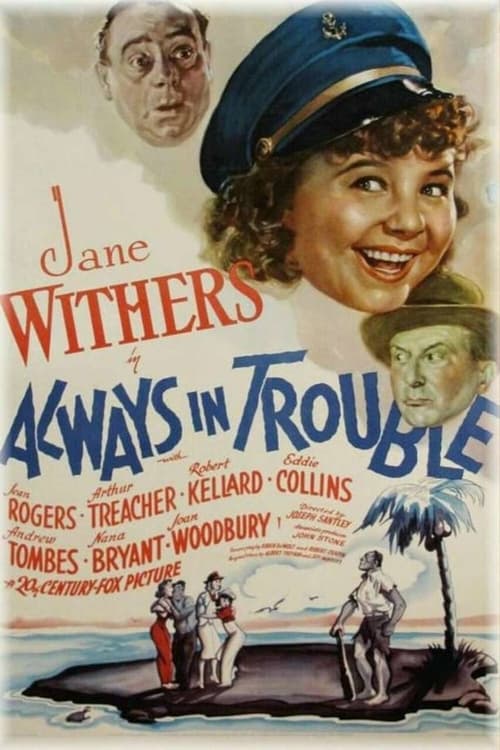
Always in Trouble is a product of the 1930s studio system, prioritizing escapism and traditional narrative structures. It functions as a conventional period comedy that adheres to the social hierarchies of its era. The film focuses on standard themes of sudden wealth and social integration. It lacks the intentionality required to disrupt established clichés or subvert the status quo. Ultimately, the work aligns with the aspirational values of its time, emphasizing social climbing and the acquisition of fortune within a traditional framework.
Category Breakdown
The film follows traditional romantic and social structures typical of 1938. There are no LGBTQ+ characters or narratives that challenge the assumption that everyone is straight or cisgender.
The plot centers on a husband whose social trajectory is dictated by his wife. This reinforces a traditional domestic hierarchy where the woman acts as a catalyst for social climbing.
The film likely reflects the homogeneous casting standards of the late 1930s Hollywood studio system. There is no indication of non-white or non-Anglo-Saxon majority casting.
The narrative explores class mobility and the transition from manual labor to high society. It leans toward traditional aspirational values rather than critiquing Western class structures.
There is no mention of characters with visible or invisible disabilities. No assessment can be made regarding the portrayal of neurodivergence or physical disability.
Present on Screen
Limited or Absent
Official Synopsis
Jane's dad (Tombes) is an oil field worker who comes into a fortune and is then pushed into society by his wife.
1931
1934

1934
1939

1939

1928

1936

1941
No reviews yet. Be the first to share your thoughts on this movie!
Use the rating form above to leave a star rating and optional review.