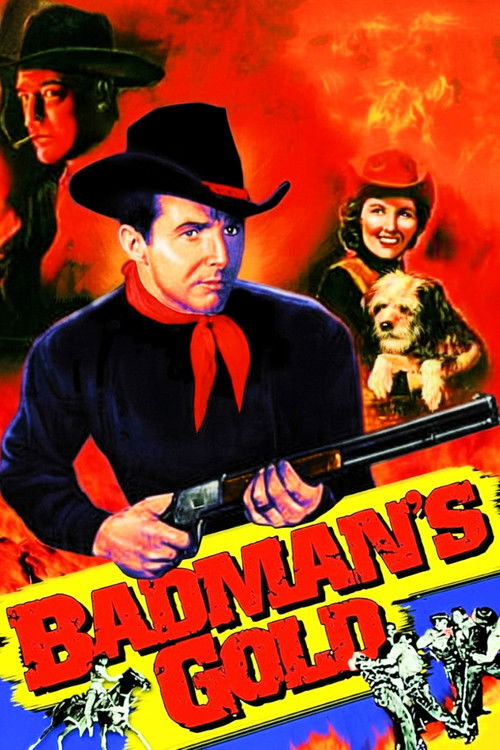
Badman's Gold
1951
No user ratings available yet
Representation score: 0.5 out of 10

Representation Score
Minimal
1953
ApprovedDirector
Thomas Carr
Runtime
71 minutes
Average Rating
No ratings yetNew Showbiz Analysis
Fighting Lawman is a quintessential mid-century Western that prioritizes established social hierarchies and conventional morality. The narrative follows a standard law-and-order framework, focusing on a US Marshal's pursuit of criminals to maintain institutional stability. The film relies heavily on genre clichés that reinforce traditional gender roles and racial homogeneity. It offers almost no disruption to the prevailing cultural norms of 1953. Ultimately, the film upholds the status quo of the era rather than challenging social structures or providing diverse perspectives.
Category Breakdown
The film does not include any characters with non-straight identities. It follows the traditional social structures and gender norms typical of 1950s Western cinema.
Narrative authority is centered on a male US Marshal. Female characters are relegated to secondary or domestic roles, reinforcing traditional masculine leadership hierarchies.
The production lacks evidence of actively leading characters of color. It likely utilizes a homogeneous white cast common to the era's frontier depictions.
The story promotes a singular moral framework centered on law and order. It emphasizes the protection of property and state-sanctioned authority.
There is no evidence of characters with disabilities possessing ability to act. Physical impairments in this era were rarely explored beyond being narrative obstacles.
Present on Screen
Limited or Absent
Official Synopsis
A US Marshal hunts down three bank robbers that are living under new identities.
1951
1966
1953
1950
1936
1954

1950
1946
No reviews yet. Be the first to share your thoughts on this movie!
Use the rating form above to leave a star rating and optional review.