The Vengeance of Pierre
1923
No user ratings available yet
Representation score: 0.3 out of 10
Representation Score
Minimal
1922
PassedDirector
Charles Maigne
Runtime
50 minutes
Average Rating
No ratings yetNew Showbiz Analysis
The film adheres to the strict social and narrative structures of early 20th-century American cinema. It focuses on the conflicts between socioeconomic classes and marital infidelity. While it explores the tension between urban aristocracy and frontier life, it reinforces rather than challenges the social hierarchies of the period. The narrative relies on a 'civilized vs. wild' dichotomy. The protagonist's actions are largely reactive, centered on her response to her husband's infidelity. This limits the film's ability to challenge the systemic structures and gendered expectations of the time. Ultimately, the production lacks complexity in addressing multiple aspects of identity. It functions as a traditional melodrama that uses class and gender clichés to drive a personal story rather than offering a progressive subversion of the era's norms.
Category Breakdown
The film follows the heterosexual and cisgender norms of the 1920s. There are no representations of LGBTQ+ identities or non-binary gender narratives.
Jessica leaves her unfaithful husband, showing she can make independent decisions. However, the resolution still upholds traditional patriarchal structures.
The film uses casting conventions typical of its time, focusing on a standard Anglo-Saxon perspective without including diverse racial backgrounds.
The film highlights class tensions between high society and the frontier, focusing on individual morality rather than institutional critique.
There are no characters with visible or invisible disabilities, and disability is not used as a narrative device.
Present on Screen
Limited or Absent
Official Synopsis
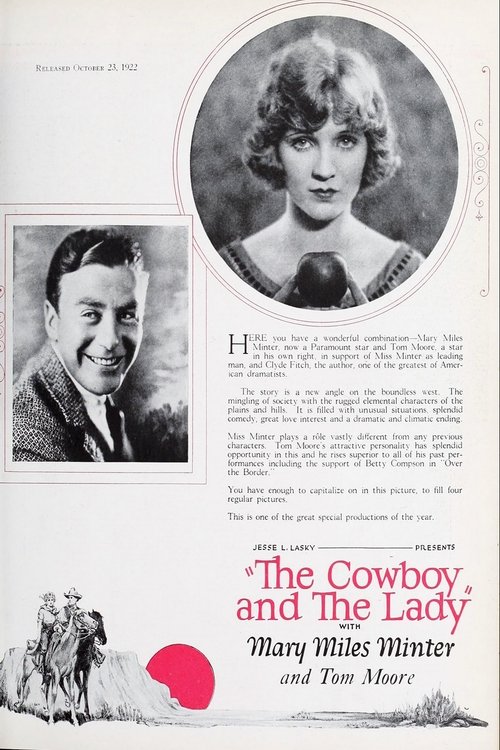
Jessica (Mary Miles Minter) becomes fed up with her husband Weston's (Robert Schable) womanizing and leaves him for a Wyoming ranch. Weston follows her, and violence and jealousy ensue.
1923
1928
1926

1930
1926

1940
1931

1954
No reviews yet. Be the first to share your thoughts on this movie!
Use the rating form above to leave a star rating and optional review.