Quick Triggers
1928
No user ratings available yet
Representation score: 0.4 out of 10
Representation Score
Minimal
1926
PassedDirector
Joseph Franz, Milburn Morante
Runtime
51 minutes
Average Rating
No ratings yetNew Showbiz Analysis
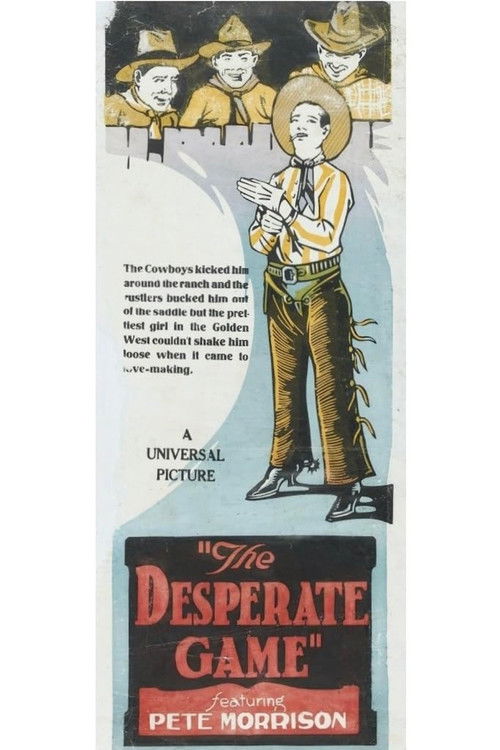
The Desperate Game is a quintessential 1920s Western that prioritizes genre conventions over social subversion. The story relies on established clichés of chivalry and masculine dominance to drive its plot forward. Representation is limited to a narrow, traditional demographic. The film reinforces existing social hierarchies, particularly regarding gender and race, by centering on a white, straight-centered ranching community. Ultimately, the film functions as a standard period piece. It lacks the depth needed to challenge the status quo of its era.
Category Breakdown
The film follows a strictly straight-centered romantic framework, focusing on a marriage arrangement between Jim Wesley and Marguerite Grayson. There is no representation of non-cisgender identities.
Gender roles are traditional and rigid. Marguerite serves as a figure needing rescue, while Jim embodies the classic masculine archetype of the heroic savior through physical prowess.
The narrative reflects the era's standard Western clichés, focusing on white ranching disputes. There are no non-white or non-Anglo-Saxon characters mentioned within the frontier setting.
The story reinforces traditional Western values like property rights and family honor. It promotes a conventional morality centered on the stability of the ranching family unit.
The synopsis provides no evidence of characters with visible or invisible disabilities. No such identities are used as plot devices in this narrative.
Present on Screen
Limited or Absent
Official Synopsis
Jim Wesley returns from college with a silk shirt and eastern ways, earning the contempt of the cowpunchers on his father's ranch. With a little hard riding and fancy roping, however, Jim proves himself to be a regular guy. Jim's father is involved in a dispute over water rights with Adam Grayson, a neighboring rancher, and the two men decide to settle the disagreement by a marriage between Jim and Grayson's daughter, Marguerite. The young people refuse, but when Marguerite is attacked by a rejected suitor, Jim comes quickly to her rescue.
1928
1940
1926
1930

1926
1932
1929
1937
No reviews yet. Be the first to share your thoughts on this movie!
Use the rating form above to leave a star rating and optional review.