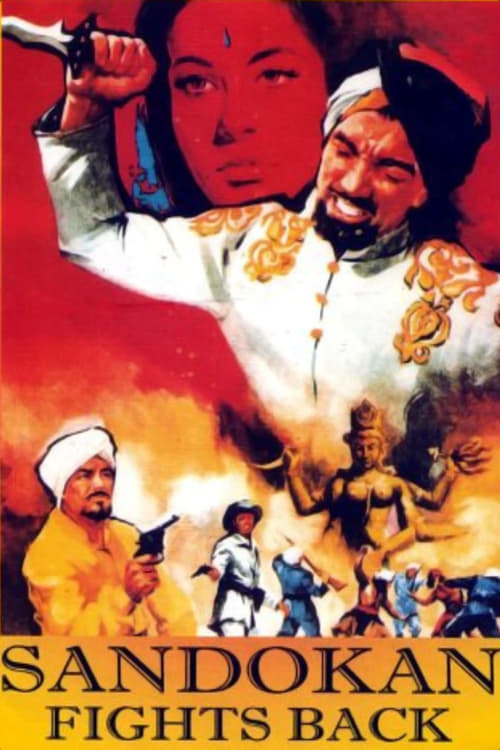
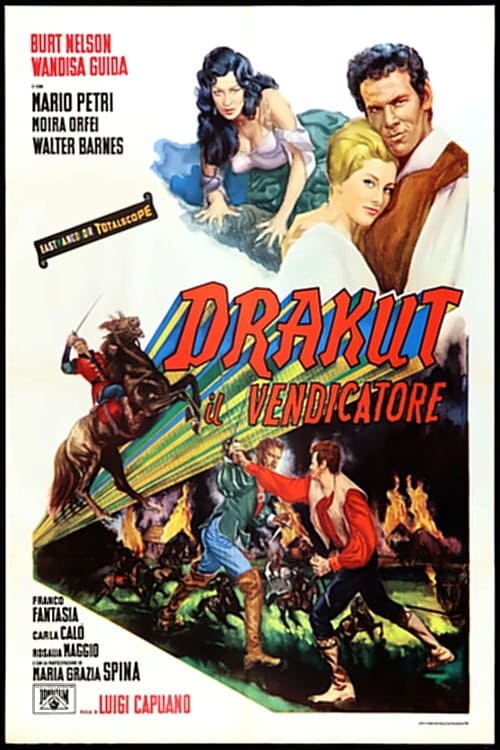
Sandokan Fights Back
1964
No user ratings available yet
Representation score: 2.1 out of 10
Representation Score
Limited
1964
GDirector
Luigi Capuano
Runtime
88 minutes
Average Rating
No ratings yetNew Showbiz Analysis
Sandokan is a product of its time, blending traditional adventure elements with an underlying anti-colonial message. While it fails to give female characters or diverse sexual identities much narrative depth, it avoids the typical 'civilizing mission' narrative found in colonial-era films. The film's strength lies in its political stance, highlighting indigenous resistance against Western imperial dominance. This adds a layer of cultural complexity often missing from mid-century adventure films. Ultimately, the work is a study in contradictions, offering progressive anti-colonial themes while maintaining outdated gender hierarchies and casting conventions.
Category Breakdown
The film does not include any LGBTQ+ characters or non-binary gender identities. The romantic storyline follows a traditional pairing between Sandokan and Samoa.
Gender roles in the film adhere to strict 1960s hierarchies. Samoa is portrayed as a passive character, while Sandokan embodies a hyper-masculine leadership without challenging traditional gender roles.
The film casts white European actors in Southeast Asian roles, reflecting the era's casting practices. However, the plot centers on local resistance against colonial powers.
The narrative presents the protagonist as a rebel against Western imperialism. It portrays colonial administration as an antagonistic force, critiquing Western expansionism.
The film does not feature any characters with disabilities. Hypnosis is used solely as a narrative device and does not explore mental health issues.
Present on Screen
Limited or Absent
Official Synopsis
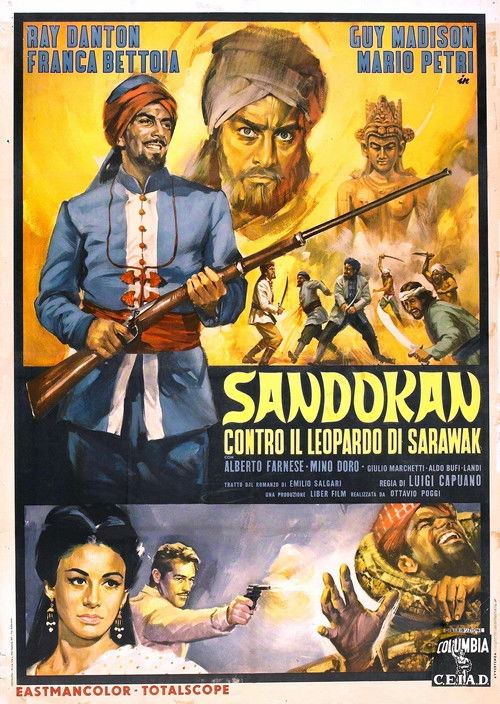
Samoa is kidnapped and held captive hypnotized in caves by her cousin Charles Druk, whose father has been murdered by her future husband Sandokan, lord of Malaya. Assisted by his European friend Iannis, he wants to rescue her.
1964
1959
1963
1970
1970
1936
1964
1961
No reviews yet. Be the first to share your thoughts on this movie!
Use the rating form above to leave a star rating and optional review.