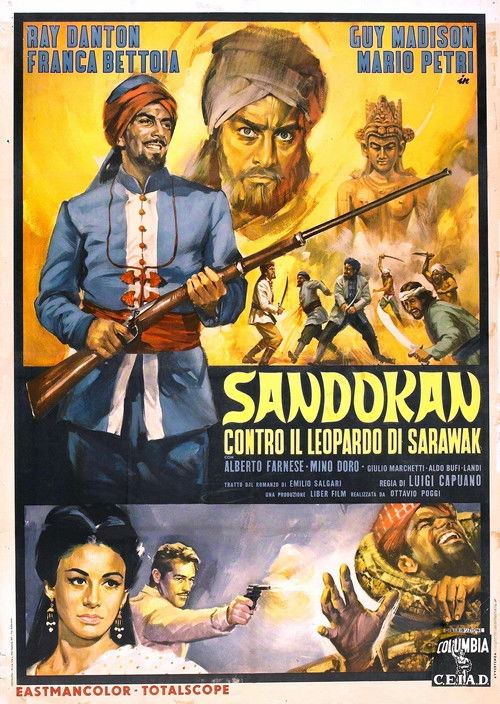
Return of Sandokan
1964
No user ratings available yet
Representation score: 2.2 out of 10
Representation Score
Limited
1964
Director
Luigi Capuano
Runtime
86 minutes
Average Rating
No ratings yetNew Showbiz Analysis
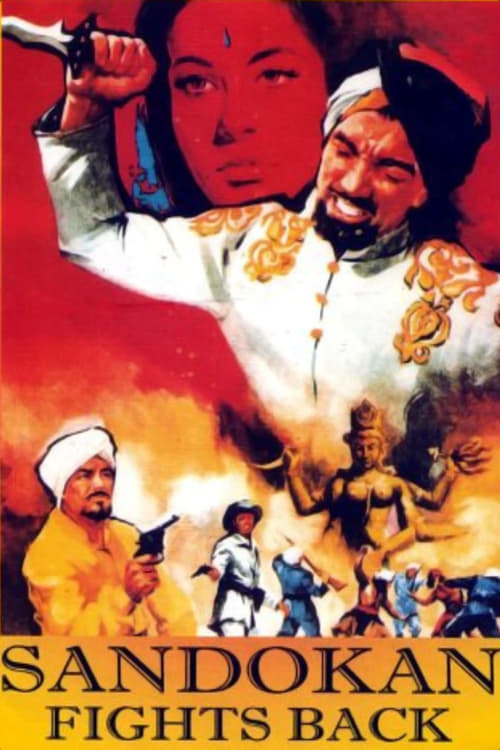
Sandokan Fights Back is a product of its 1964 era, marked by traditional casting and rigid gender roles. The film relies on mid-century adventure clichés that emphasize male leadership and straight-centered structures. However, the film stands out by framing the struggle for local sovereignty against British colonial forces as the central conflict. This provides a critique of imperial authority. Ultimately, the film’s diversity is a tension between its conventional character types and its subversive political stance against Western dominance.
Category Breakdown
The film follows a traditional framework that assumes everyone is straight and cisgender. There are no representations of non-straight or non-cisgender identities.
The male protagonist, Sandokan, dominates the narrative. Female characters mainly serve as romantic interests or figures needing protection.
A white European actor plays the role of the regional hero, reflecting old colonial casting practices. Indigenous Southeast Asian characters add ethnic diversity but often lack individual ability to act.
The film disrupts Western-centric norms by focusing on a rebellion against colonial rule. It presents British imperial administration as the main antagonist.
There is no significant depiction of physical or neurodivergent disabilities in this work.
Present on Screen
Limited or Absent
Official Synopsis
When Sandokan learns he is the rightful heir to the throne of Malaysia, he immediately sets off to claim his land back.
1964
1970
1970
2014
1963
1961
1962
1958
No reviews yet. Be the first to share your thoughts on this movie!
Use the rating form above to leave a star rating and optional review.