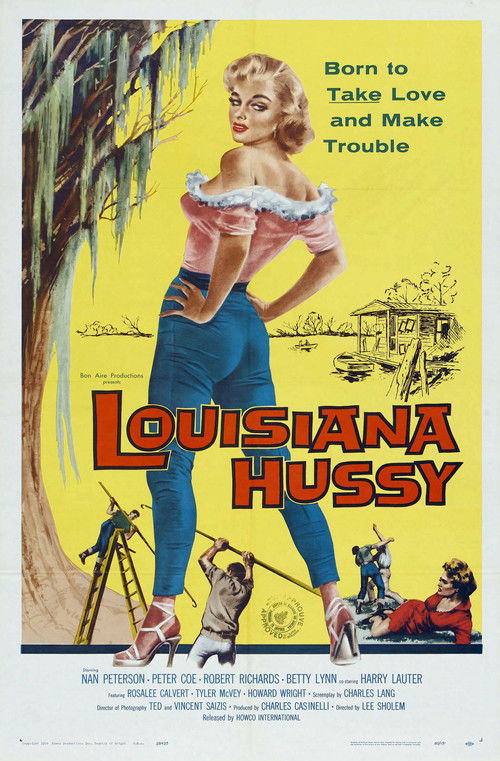
The Louisiana Hussy
1959
No user ratings available yet
Representation score: 2.2 out of 10

Representation Score
Minimal
1957
NRDirector
Harold Daniels
Runtime
83 minutes
Average Rating
No ratings yetNew Showbiz Analysis
Bayou is a typical mid-century melodrama that operates within the narrow narrative boundaries of its time. The story prioritizes a localized romantic conflict rather than broader social issues. The film lacks structural complexity and fails to challenge established social hierarchies, relying instead on traditional regional and masculine rivalry clichés. Ultimately, it focuses on individual morality and romantic tension rather than progressive or multi-layered commentary.
Category Breakdown
The film follows a traditional structure centered around a romantic rivalry between two men for a woman's affection.
Marie serves as the emotional core, but her role is limited by male attention. The conflict is driven by masculine rivalry rather than female autonomy.
The Cajun setting adds regional flavor, but the story focuses more on class and region than on racial diversity.
The narrative adheres to mid-century melodrama norms, emphasizing personal morality and local social hierarchies.
There are no visible or invisible disabilities mentioned within the character arcs or the central plot.
Present on Screen
Limited or Absent
Official Synopsis
In 1957, director Harold Daniels was hired by producer Michael A. Ripps to oversee BAYOU, a cheaply made, overly melodramatic tale of swamp life. The low budget film starred a pre-MISSION IMPOSSIBLE Peter Graves, Corman regular Jonathan Haze, and the effortlessly bizarre Timothy Carey. But despite this eclectic cast, BAYOU was a major flop at the box office. So Ripps recut the film, adding an off-camera rape scene and a new, bloody conclusion to its climatic fight. Of even greater importance was Ripp's new title: POOR WHITE TRASH.
1959

1960
1961
1962

1960
1966
1955

1949
No reviews yet. Be the first to share your thoughts on this movie!
Use the rating form above to leave a star rating and optional review.