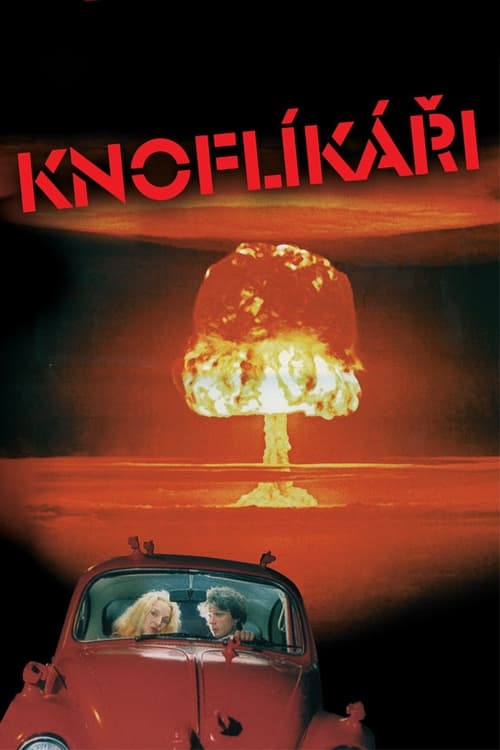
Buttoners
1997
No user ratings available yet
Diversity score: 4.9 out of 10
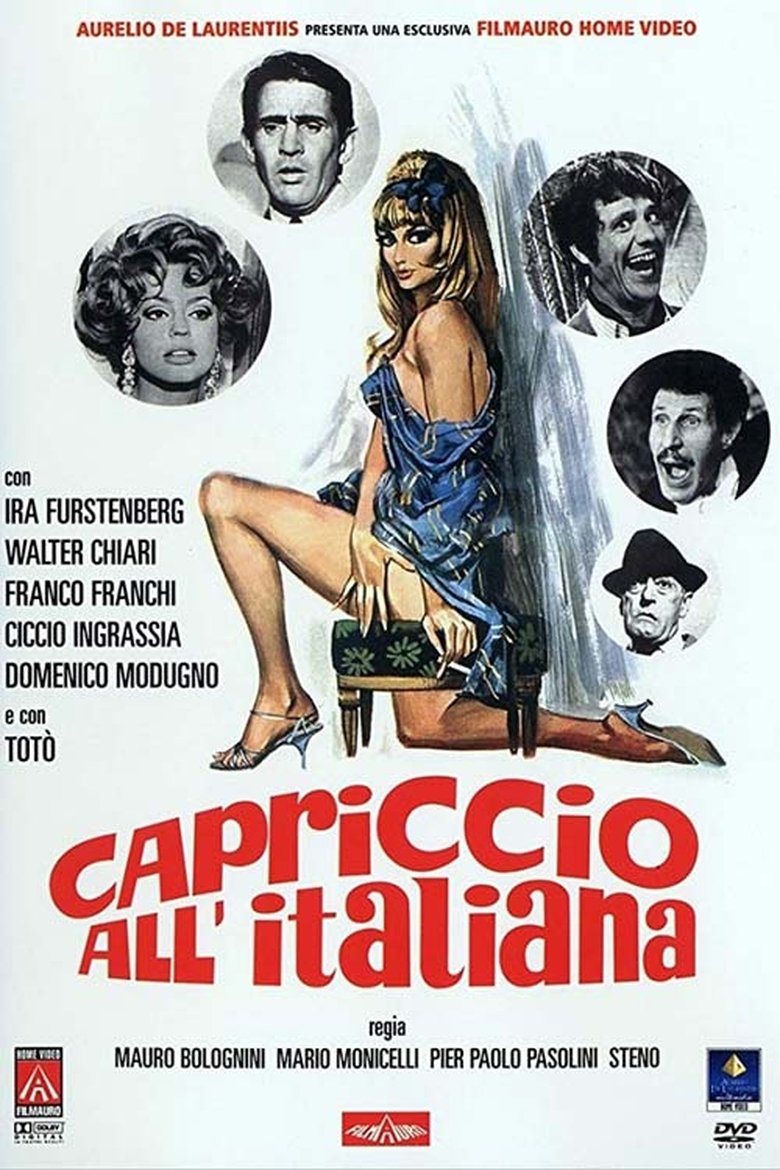
1968
Director
Mario Monicelli, Steno, Mauro Bolognini, Pier Paolo Pasolini, Franco Rossi, Pino Zac
Runtime
79 minutes
Average Rating
No ratings yetSynopsis
The film consists of six short stories created by different directors, but all the stories share one thing: a warm irony to current events.
Overall Score
Fair
Category Breakdown
LGBTQ+ Representation
The film adheres to 1960s European cinematic conventions, lacking explicit non-cisnormative identity narratives. While subtext may hint at unconventional desires, the plots focus primarily on heteronormative courtship and romantic whims.
Gender Representation
Women are portrayed with moderate agency, often acting as drivers of romantic disruption rather than passive objects. However, these depictions sometimes oscillate between genuine empowerment and the reinforcement of infidelity tropes.
Racial & Ethnic Diversity
Casting is largely homogeneous, reflecting the demographic norms of 1968 Italy. The film focuses on internal Italian social strata rather than pursuing intentional intersectional racial diversity.
Religious & Cultural Diversity
The anthology excels at deconstructing rigid morality by prioritizing individual desire over religious dogma or family stability. Pasolini’s involvement adds a layer of skepticism toward bourgeois social hierarchies.
Disability Representation
Disability is not a central thematic pillar of the anthology. The narrative focuses on the psychological and social whims of an able-bodied cast without significant representation.
Strengths
Areas for Improvement
AI Analysis
Caprice Italian Style serves as a transitional cinematic text that captures the shift from rigid traditionalism toward a more subjective view of human behavior. Its episodic structure allows for a fragmented exploration of social friction and desire. The film finds its strength in moral relativism and the subversion of social mores. By centering on the unpredictable nature of human impulse, it challenges established hierarchies and the stability of traditional institutions. However, the work remains limited by its historical context. It lacks intersectional breadth and fails to move beyond the homogeneous demographic norms of mid-century Italy.
1997

1966
1964
1986
1971

1968
1977
1969

1981
1954
1993
1998
No reviews yet. Be the first to share your thoughts on this movie!
Use the rating form above to leave a star rating and optional review.