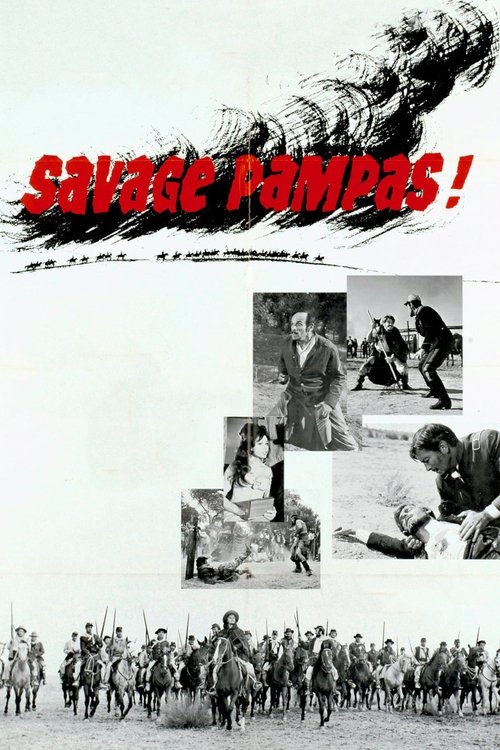
Savage Pampas
1966
No user ratings available yet
Representation score: 2.6 out of 10

Representation Score
Minimal
1945
Director
Hugo Fregonese, Lucas Demare
Runtime
93 minutes
Average Rating
No ratings yetNew Showbiz Analysis
Savage Pampas is a product of mid-1940s Argentine cinema, adhering closely to the conventions of the Western genre. The film prioritizes military duty and territorial control over character development or social critique. The narrative structure reinforces existing power dynamics. Women are used as a means to prevent soldiers from leaving the military, treating femininity as a stabilizing force for a masculine institution rather than exploring independent ability to act. Ultimately, the film serves as a period-accurate drama that upholds the status quo. It lacks multi-layered exploration, focusing instead on command, duty, and the maintenance of social order.
Category Breakdown
The film does not include any characters with non-straight or non-cisgender identities. It maintains traditional heterosexual relationships to uphold military order.
Women are portrayed as supporting figures for the male-dominated military structure rather than as independent characters. They play a secondary role in maintaining institutional stability.
The film likely reflects the demographic makeup of the Argentine Pampa region. However, it focuses on the dominant social classes without highlighting the perspectives of underrepresented indigenous communities.
The story follows traditional frontier narratives, emphasizing institutional authority and social cohesion through established hierarchies.
There is no information about the portrayal of physical or neurodivergent disabilities in the film.
Present on Screen
Limited or Absent
Official Synopsis
In a fort in the middle of the Pampa, their commander Hilario Castro decides to bring women from Buenos Aires to prevent deserting soldiers.
1966
1968

1943
1955

1952
1969
1914

1974
No reviews yet. Be the first to share your thoughts on this movie!
Use the rating form above to leave a star rating and optional review.