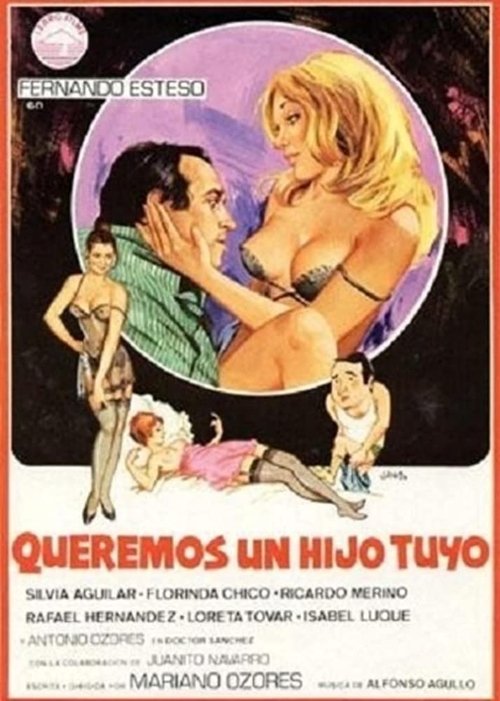
Queremos un hijo tuyo
1981
No user ratings available yet
Diversity score: 2.2 out of 10
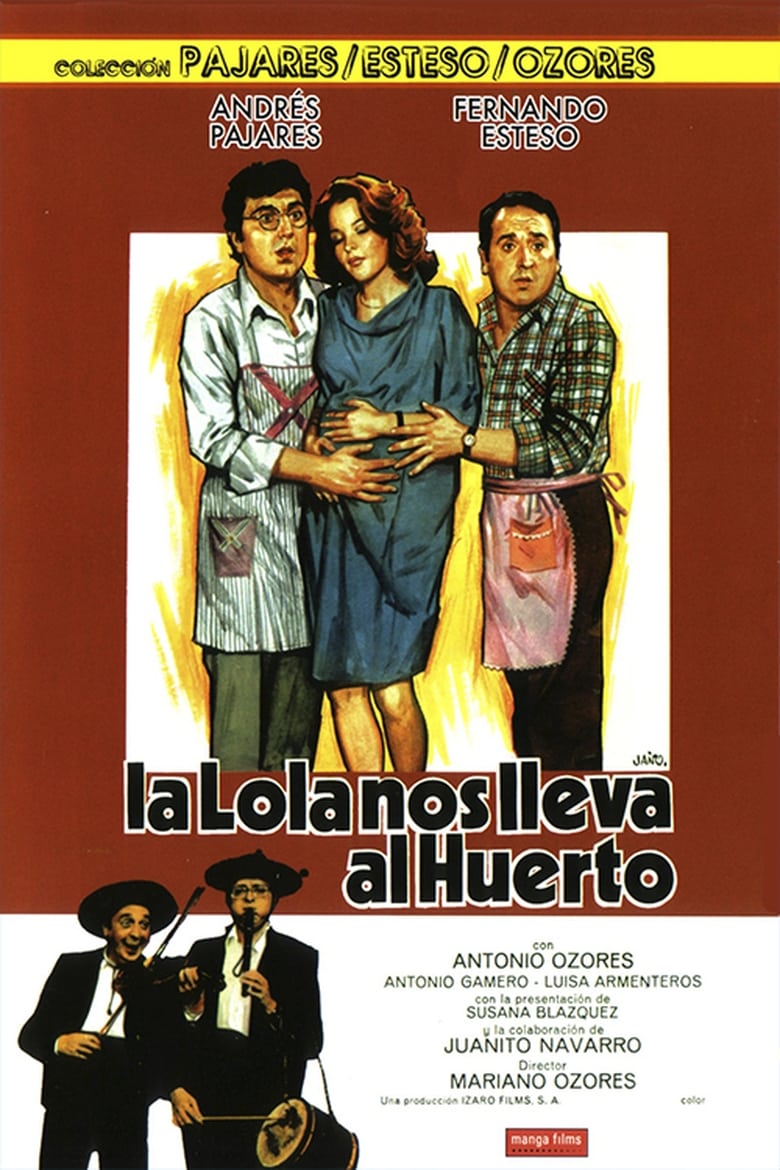
1984
Director
Mariano Ozores Puchol
Runtime
90 minutes
Average Rating
No ratings yetSynopsis
Lola is a beautiful young girl who is going to have a child but doesn't know who is the father. So she says, first Paco and later Ataulfo that the child is his. This causes the friends the enemisten and separate from Lola. Finally, reflect and come back for deciding that love between her and take care of the child. Then see who is closer, but in fact, none of them wants to take responsibility for the child.
Overall Score
Limited
Category Breakdown
LGBTQ+ Representation
The film focuses on a heteronormative romantic conflict centered on pregnancy and paternity. There is no evidence of queer narratives or non-cisnormative identities within the story.
Gender Representation
Lola drives the central conflict, but her agency is largely defined by her reproductive status. The plot emphasizes male refusal of responsibility, leaning into traditional gender tropes.
Racial & Ethnic Diversity
The film likely reflects the demographic homogeneity typical of 1980s regional European cinema. There is no indication of multicultural narratives or diverse casting.
Religious & Cultural Diversity
The story explores unplanned pregnancy through the lens of interpersonal drama. It adheres to traditional social values rather than offering a systemic critique of institutions.
Disability Representation
The narrative contains no information regarding characters with physical or neurodivergent disabilities.
Strengths
Areas for Improvement
AI Analysis
La Lola nos lleva al huerto is a conventional 1980s Spanish comedy that prioritizes traditional narrative structures over social subversion. The plot centers on a singular romantic conflict involving pregnancy and the search for paternity, which keeps the focus within narrow, heteronormative boundaries. While the female protagonist initiates the plot, the story's momentum relies heavily on the actions and irresponsibility of the male characters. This creates a dynamic rooted in established gender tropes of the era rather than a modern, intersectional exploration of identity. Ultimately, the film functions as a period-specific piece of mainstream entertainment. It lacks the diverse casting or systemic critique necessary to move beyond the demographic and social homogeneity of its time.
1981
1981
1975

1974
1973
1984
1982
1964
1972
1924

1966
1956
No reviews yet. Be the first to share your thoughts on this movie!
Use the rating form above to leave a star rating and optional review.