Cheese-Nappers
1938
No user ratings available yet
Representation score: 0.4 out of 10
Representation Score
Minimal
1939
NRDirector
Tex Avery
Runtime
8 minutes
Average Rating
No ratings yetNew Showbiz Analysis
Tex Avery’s short is a product of its 1939 era, serving primarily as a genre-driven comedy. The narrative relies on slapstick humor and the subversion of traditional authority, particularly through an incompetent police force. While the film uses superstition for comedic effect, it lacks intentional diverse representation. It adheres to the demographic and social structures typical of 1930s animation, focusing on a predictable crime-and-pursuit framework. Overall, the film does not seek to deconstruct social hierarchies or offer diverse character perspectives, staying true to the homogeneous casting norms of its time.
Category Breakdown
The film does not include any queer narratives or non-straight relationships. The plot focuses solely on a traditional crime and pursuit storyline.
The story revolves around a male-dominated criminal gang and police force, adhering to traditional gender roles without highlighting women's roles or intellect.
Produced in 1939, the film does not feature a predominantly non-white cast. There is no indication of race-bent casting to challenge historical norms.
The film explores superstition through the 13th bank, offering a moderate skepticism towards traditional institutions' competence.
The film does not depict any characters with visible or invisible disabilities. Such characters are not central to the narrative.
Present on Screen
Limited or Absent
Official Synopsis
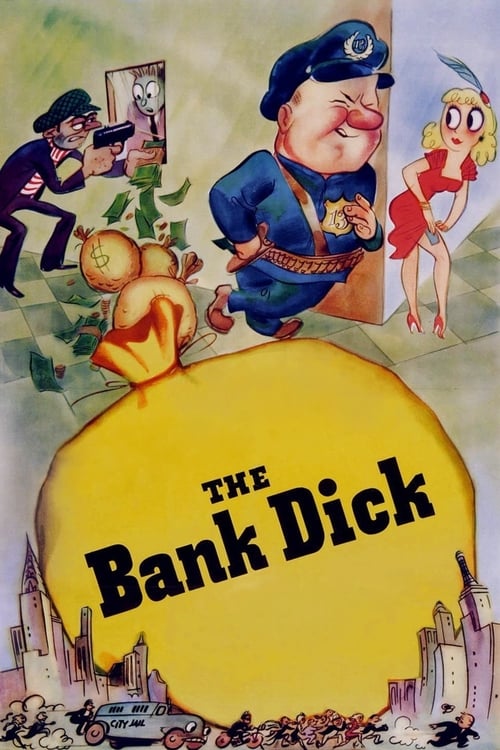
Killer Diller and his gang are robbing every bank in town in numerical order (except the 13th National Bank, which they skip out of superstition). Despite their predictable actions, the police are unable to catch them...until they get a tip from an unlikely source.
1938
1940
1954
1955
1957

1943
1946
1963
No reviews yet. Be the first to share your thoughts on this movie!
Use the rating form above to leave a star rating and optional review.