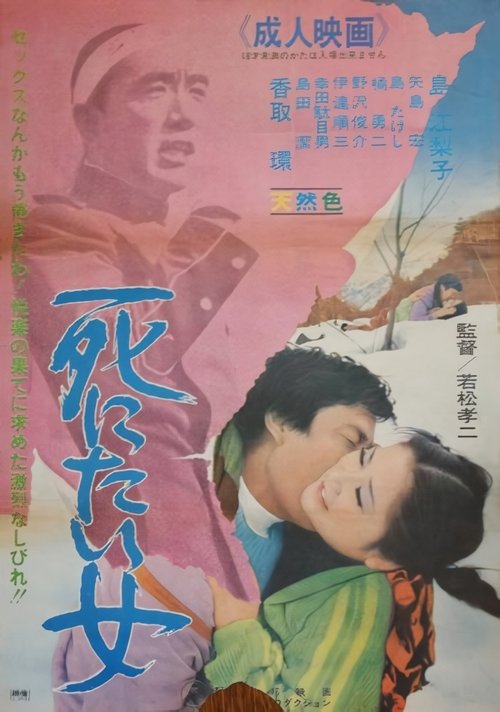
The Woman Who Wanted to Die
1971
No user ratings available yet
Representation score: 5.9 out of 10

Representation Score
Good
1965
Director
Kōji Wakamatsu
Runtime
80 minutes
Average Rating
No ratings yetNew Showbiz Analysis
Perverse Relations is a study of psychological alienation that prioritizes the subversion of social norms over demographic variety. While it lacks LGBTQ+ and racial diversity, it excels in deconstructing gendered power structures and institutional morality. The film replaces the traditional archetype of the stable male leader with a landscape of mutual manipulation, creating a progressive, albeit nihilistic, disruption of the era's domestic expectations. Ultimately, the work functions as a radical critique of organized social order, using character instability to challenge the integrity of traditional institutions.
Category Breakdown
The film centers on a troubled heterosexual relationship and does not include any non-cisgender identities or same-sex intimacy.
Female characters play a significant role in driving the story, challenging traditional gender hierarchies. The narrative depicts a volatile power struggle between the doctor and the women in his life.
The cast is ethnically uniform, reflecting the film's setting in Tokyo. The film does not explore racial diversity or the intersection of different backgrounds beyond this singular cultural context.
The story critiques institutional authority and social stability by highlighting interpersonal dysfunction, challenging traditional morality and the sanctity of the family unit.
Psychological trauma and mental instability are key plot devices, serving to highlight thematic decay rather than offering nuanced representations of neurodivergence or specific disabilities.
Present on Screen
Limited or Absent
Official Synopsis
A doctor, gynecologist, discover the corpse of his wife. His nurse advises to him to declare her death a simple heart attack, to clear himself without the slightest doubt. He refuses and calls the police force there. The interrogation of the doctor, then other witnesses, slowly reveals the truth of her demise…
1971

1978

1969
1960

1969
1971

1966

1978
No reviews yet. Be the first to share your thoughts on this movie!
Use the rating form above to leave a star rating and optional review.