
The River
1929
No user ratings available yet
Representation score: 3.3 out of 10
Representation Score
Minimal
1946
ApprovedDirector
Frank Borzage
Runtime
117 minutes
Average Rating
No ratings yetNew Showbiz Analysis
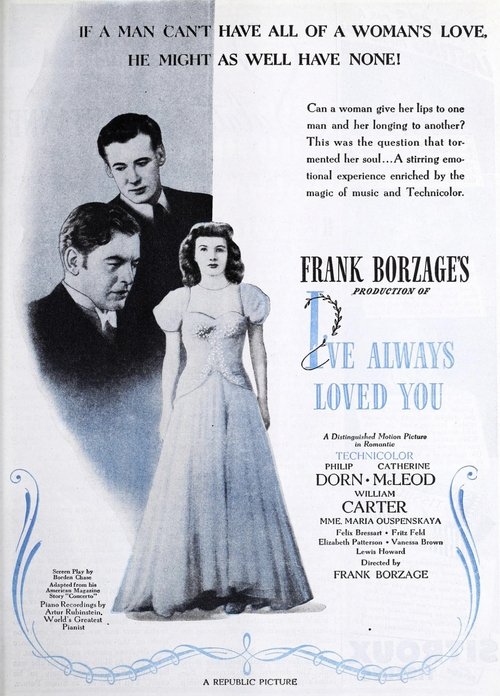
I've Always Loved You is a classic mid-century romantic melodrama that aligns closely with the social and cinematic norms of its time. The film emphasizes traditional romantic ideals and emotional depth over any form of systemic critique or identity-based challenges. The production mirrors the demographic uniformity of the 1940s, set in a Western European context with a homogeneous cast. It serves as a historical benchmark for the genre, highlighting conventional sentimentality rather than moral ambiguity. Overall, the film lacks layered representation of diverse identities. It upholds established social hierarchies and traditional power structures without challenging them.
Category Breakdown
The film focuses solely on heterosexual romance and does not include any characters with non-binary gender identities or same-sex relationships.
Marie's actions are driven by her romantic relationships rather than her professional life. Male characters embody traditional roles of intellectual leadership and emotional stability.
The cast consists of actors with similar European backgrounds, reflecting the demographic makeup typical of mid-1940s productions centered around a specific Western European context.
The storyline upholds traditional social roles and romantic devotion without questioning Western societal or religious norms.
No visible or hidden disabilities are featured in the main characters' stories. The narrative does not center around disability themes.
Present on Screen
Limited or Absent
Official Synopsis
A beautiful young concert pianist is torn between her attraction to her arrogant but brilliant maestro and her love for a farm boy she left back home.
1929

1939

1945

1938

1948

1935

1951

1952
No reviews yet. Be the first to share your thoughts on this movie!
Use the rating form above to leave a star rating and optional review.