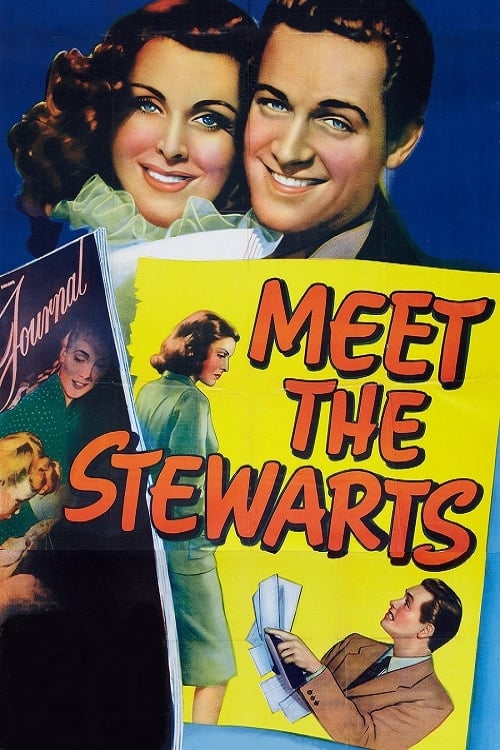
Meet the Stewarts
1942
No user ratings available yet
Representation score: 0.4 out of 10

Representation Score
Minimal
1924
PassedDirector
Roy Clements, Fred Guiol
Runtime
20 minutes
Average Rating
No ratings yetNew Showbiz Analysis
Meet the Missus is a silent-era domestic comedy that operates within the rigid social and demographic hierarchies of the 1920s. The plot focuses on a young married couple's struggle for social mobility and financial stability, reinforcing traditional capitalist and familial structures. The film lacks complexity in its portrayal of diverse identities, adhering to the homogeneous casting standards of the time. It functions as a standard comedic struggle rather than a critique of social norms. Ultimately, the film offers a narrow view of the era, centering on a conventional white, middle-class aspiration without exploring diverse identities or systemic issues.
Category Breakdown
The film focuses on a young married couple, suggesting a strictly straight-centered framework. No queer or non-binary identities are represented.
The story centers on a traditional marital unit facing financial and interpersonal issues. While the couple's conflicts deviate from idealized domesticity, they don't challenge traditional gender roles.
The narrative focuses on a conventional white domestic experience. There is no indication of a diverse cast or the inclusion of non-Anglo-Saxon characters.
The plot reinforces traditional social institutions through a focus on the nuclear family. The central tension revolves around class upward mobility and professional appearances.
The documentation provides no mention of characters with visible or invisible disabilities.
Present on Screen
Limited or Absent
Official Synopsis
A young married couple (Glenn Tryon and Blanche Mehaffey) with no money and lots of time for fighting try to impress the husband's boss.
1942

1929
1952
1940
1932
1942
1926
1947
No reviews yet. Be the first to share your thoughts on this movie!
Use the rating form above to leave a star rating and optional review.