You are here:

Paris on Parade

Paris on Parade

Representation Score

2.5/10

Limited

1938

Approved

Director

James A. FitzPatrick

Runtime

9 minutes

Average Rating

No ratings yet

New Showbiz Analysis

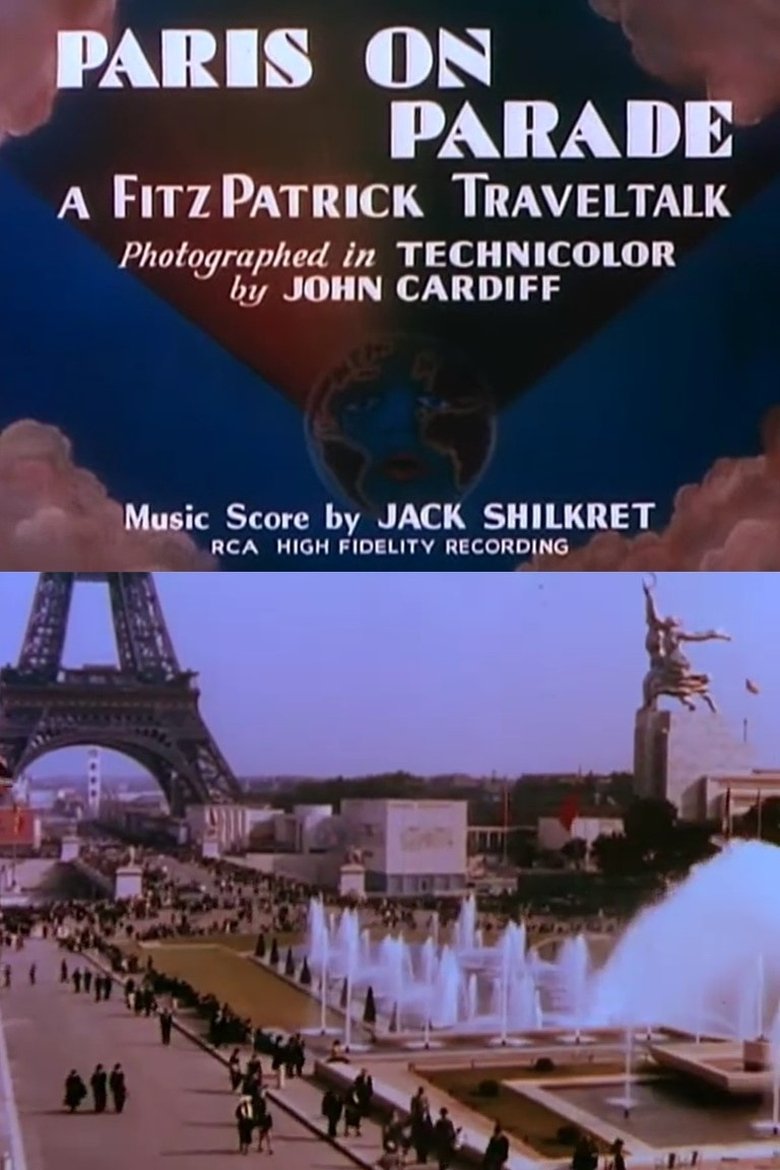
Paris on Parade is a documentary that surveys the 1937 Paris International Exposition, emphasizing technological spectacle over personal narratives. While the event brings various ethnicities together, they are portrayed as part of a collective international backdrop rather than distinct individuals. The film reflects the social and institutional norms of its time, serving as a celebratory newsreel that upholds the status quo. It does not challenge the cultural norms of the late 1930s. Ultimately, the documentary highlights the grandeur of Western industrialism and architectural achievements, while neglecting diverse identities and social critiques.

Watch this, not that →

Category Breakdown

Does Paris on Parade have LGBTQ+ representation?

Minimal

The film does not include any LGBTQ+ characters or non-straight gender expressions. It focuses solely on public events and architectural achievements.

How does Paris on Parade portray gender?

Limited

Women are shown mainly as spectators or tourists within traditional feminine roles. The film supports the conventional gender roles of the late 1930s.

How racially and ethnically diverse is Paris on Parade?

Fair

The footage includes a variety of international visitors and national pavilions. However, these groups are presented as part of a global spectacle rather than through individualized stories.

How does Paris on Parade represent religion and culture?

Limited

The narrative highlights Western modernity, industrialism, and technological progress. It supports the stability of established international institutions and an optimistic view of Western advancement.

Does Paris on Parade include disability representation?

Minimal

There are no notable depictions of individuals with visible or invisible disabilities. The focus on large-scale architecture and crowds overlooks those with disabilities.

Present on Screen

  • Captures a diverse array of international visitors and national pavilions.
  • Provides a visual record of a global gathering during the interwar period.

Limited or Absent

  • Lacks individualized stories or deep character development for diverse groups.
  • Supports traditional gender roles and patriarchal social structures.
  • Overlooks individuals with disabilities.
  • Focuses on a narrow narrative of Western-led industrial and technological progress.

Official Synopsis

This Traveltalks short showcases the Paris International Exposition of 1937. It features a tour of the pavillions of several nations, as well as the spectacular water and light displays.

How are these scores produced? →

Where to Watch

Rate this Movie

No rating selected
Use arrow keys to select a rating from 1 to 5 stars
Optional text review, maximum 2000 characters
Tip: Wrap spoilers with ||double pipes|| to hide them
0/2000 characters
You must be signed in to submit a rating

Reviews

No reviews yet. Be the first to share your thoughts on this movie!

Use the rating form above to leave a star rating and optional review.