The Wonderful Horrible Life of Leni Riefenstahl
1993
No user ratings available yet
Representation score: 2.9 out of 10
Representation Score
Minimal
1978
Director
Hans-Jürgen Syberberg
Runtime
302 minutes
Average Rating
No ratings yetNew Showbiz Analysis
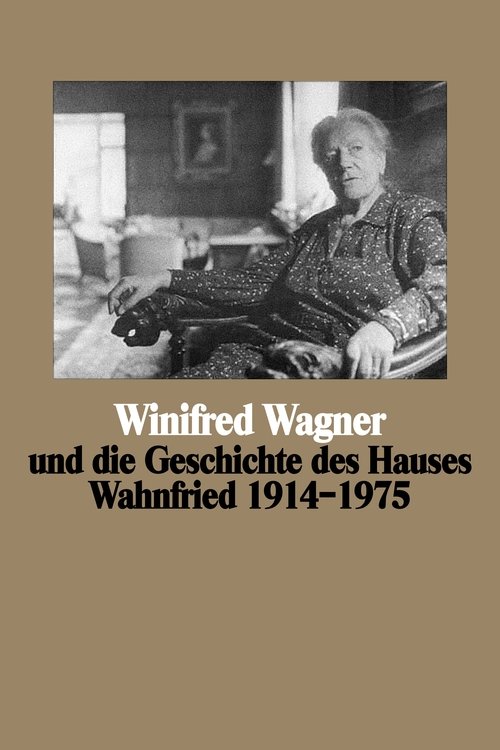
Syberberg’s documentary serves as a critical autopsy of historical extremism rather than a vehicle for inclusive representation. It focuses on the singular, unrepentant political identity of Winifred Wagner during the Third Reich. The film's low diversity scores reflect its specific subject matter: the documentation of a homogeneous, white European elite. It examines how a woman navigates fascist power structures rather than challenging gender hierarchies. Ultimately, the work exposes the toxicity of traditionalist, nationalist hierarchies. It does so by highlighting the gap between the subject's self-perception and her historical reality.
Category Breakdown
The documentary focuses on the domestic and political life of the Wagner family. There are no characters or narratives addressing LGBTQ+ identities or non-straight relationships.
Winifred Wagner is a central, powerful female figure. However, the film examines her through a lens of political complicity and psychological delusion within patriarchal structures.
The film is a focused study of a specific German lineage. It centers on a homogeneous white European elite with no diverse ethnic perspectives.
The work critiques the intersection of high art and ultra-nationalist politics. It documents reactionary, fascist ideologies rather than promoting progressive cultural values.
There is no discernible focus on physical or neurodivergent disabilities as a central narrative element in this historical study.
Present on Screen
Limited or Absent
Official Synopsis
Winifred, the geriatric daughter-in-law of the famed composer Richard Wagner, talks about her cultural and political influence during the Third Reich. Yet in contradiction to the films's title, Winifred confesses nothing. The contradictions within her discourse do, however, reveal the extent of her delusions and political commitment as an unrepentant fascist. She paradoxically describes herself as a completely apolitical being, adamant that her classification as a grade three Nazi at the end of the war was a grave injustice. Still Winifred cannot contain her amusement when she recalls that after the collapse of the Third Reich, she was the only person left in Germany who would admit that she was a Nazi.
1993

1935
2002

1938
1984
2016
2005
2024
No reviews yet. Be the first to share your thoughts on this movie!
Use the rating form above to leave a star rating and optional review.