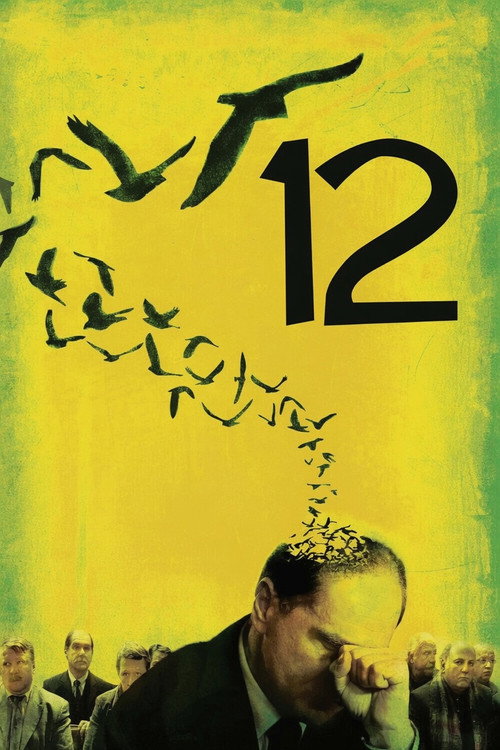
12
2007
No user ratings available yet
Representation score: 2.4 out of 10

Representation Score
Limited
1986
Director
Basu Chatterjee
Runtime
127 minutes
Average Rating
No ratings yetNew Showbiz Analysis
Ek Ruka Hua Faisla is a character-driven drama that prioritizes psychological tension and moral inquiry. Because it is a remake of 12 Angry Men, the narrative is inherently constrained by an all-male power structure. This setting limits the potential for diverse perspectives and characters who reflect more than one aspect of diversity. The film remains culturally authentic to its 1986 Indian setting but does not actively seek to challenge traditional social norms. While it avoids harmful stereotypes, it lacks the intentionality required to promote progressive identity politics or disrupt established hierarchies.
Category Breakdown
The film does not include any representation of non-binary gender identities. It adheres to traditional social norms without questioning the assumption that everyone is straight or cisgender.
The jury is composed entirely of men, reinforcing patriarchal structures of authority. This male-dominated setting restricts the visibility and influence of women in the central conflict.
The cast reflects a culturally uniform environment, consistent with the urban Indian context of the production. It avoids whitewashing but does not use diverse casting to disrupt social hierarchies.
The narrative centers on individual morality and institutional processes, emphasizing responsibility within a structured societal framework. It does not deconstruct religious or Western institutions.
There is no representation of characters with visible or invisible disabilities. The characters are portrayed as able-bodied urbanites fulfilling a civic duty.
Present on Screen
Limited or Absent
Official Synopsis
Twelve jurors gather in a closed room to deliberate on a murder charge against a young man accused of killing his elderly father. Eleven are convinced of his guilt, while one remains unconvinced. As the others attempt to persuade him to join their unanimous verdict, doubts begin to emerge. A Hindi adaptation of 12 Angry Men.
2007
1989
1954
1954
1973

1998
1963

2021
No reviews yet. Be the first to share your thoughts on this movie!
Use the rating form above to leave a star rating and optional review.