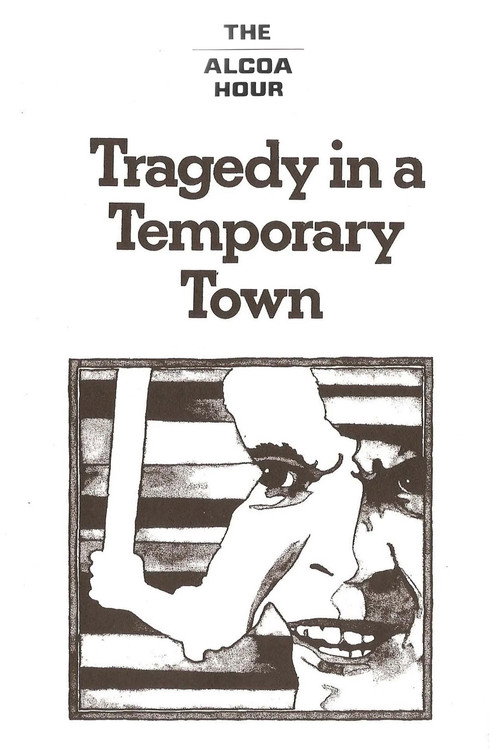
Tragedy in a Temporary Town
1956
No user ratings available yet
Diversity score: 3.1 out of 10

1973
Director
Gustavo Pérez Puig
Runtime
112 minutes
Average Rating
No ratings yetSynopsis
The defense and the prosecution have rested and the jury is filing into the jury room to decide if a young man is guilty or innocent of murdering his father.
Overall Score
Limited
Category Breakdown
LGBTQ+ Representation
The film operates within a traditional masculine framework. There are no visible LGBTQ+ characters or narratives addressing non-cisnormative identities.
Gender Representation
The cast is exclusively male, resulting in a total absence of female agency. The narrative reinforces patriarchal hierarchies by centering all discourse within a male-only space.
Racial & Ethnic Diversity
The cast is largely homogeneous, focusing more on class-based distinctions than ethnic variety. It uses socioeconomic backgrounds to show how prejudice influences the perception of justice.
Religious & Cultural Diversity
The film offers a nuanced critique of institutional reliability and moral relativism. It portrays the judicial system as a fallible human construct susceptible to personal bias.
Disability Representation
There is no significant focus on visible or invisible disabilities. Character struggles are primarily psychological and social rather than centered on physical or neurodivergent impairments.
Strengths
Areas for Improvement
AI Analysis
Doce hombres sin piedad is a character-driven study of social psychology that prioritizes thematic depth over intersectional representation. While the film lacks diversity in terms of gender and sexual orientation, it provides a sophisticated look at how personal bias affects institutional integrity. The narrative succeeds in using class-based distinctions to explore the complexities of justice. However, the complete absence of female characters and LGBTQ+ identities limits its scope within a modern diversity framework.
1956
1989

2008

1954

2006
2019

1998

2014

2019

1993

1975
1998
No reviews yet. Be the first to share your thoughts on this movie!
Use the rating form above to leave a star rating and optional review.