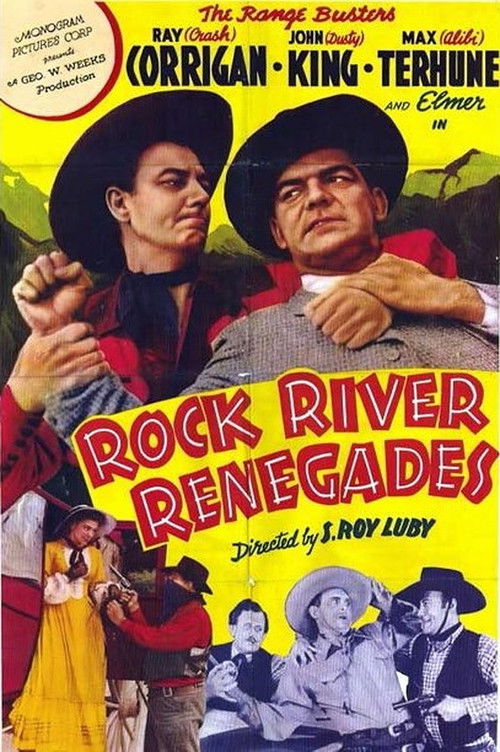
Rock River Renegades
1942
No user ratings available yet
Representation score: 1.1 out of 10

Representation Score
Minimal
1950
PassedDirector
Ralph Murphy
Runtime
81 minutes
Average Rating
No ratings yetNew Showbiz Analysis
Stage to Tucson is a classic mid-century Western that adheres closely to the social and narrative norms of its time. The film reinforces established hierarchies, particularly regarding gender and authority, by centering its conflict on masculine archetypes of competence. The story prioritizes institutional stability and traditional morality, focusing on the struggle between Union supporters and outlaws. This framework leaves little room for challenging social hierarchies or including diverse identities. Ultimately, the film serves as a typical genre piece reflecting the homogeneous social structures and straight-centered romantic clichés prevalent in 1950s studio filmmaking.
Category Breakdown
The film follows a traditional structure centered around heterosexual relationships. The plot revolves around a love triangle involving two men competing for a woman, reinforcing the romantic clichés of the era.
Male characters dominate the leadership roles in the film. While Kate Crocker is a key figure, she primarily serves as a catalyst for male competition rather than an independent protagonist.
The narrative focuses on Union and Southern sympathizers without including diverse ethnic groups. The setting reflects the homogeneous social structures typical of 1950s Westerns, with no ethnic diversity in positions of power.
The story emphasizes traditional Western values and the protection of institutional order. It presents a clear moral dichotomy between law-abiding citizens and criminals without questioning Western institutions.
The film does not include characters dealing with physical, sensory, or neurodivergent conditions.
Present on Screen
Limited or Absent
Official Synopsis
A group of outlaws posing as Southern sympathizers and led secretly by freight-line owner Jim Maroon are raiding stagecoaches, and this is a threat to the Union communications. Grif Holbrook, a trouble-shooter for the Butterfield Stage Line, and Union man Barney Broderick team up to try and put a stop to the activity, when they aren't fighting over the charms of Kate Crocker.
1942

1939
1948
1951
1946
1949
1945
1949
No reviews yet. Be the first to share your thoughts on this movie!
Use the rating form above to leave a star rating and optional review.