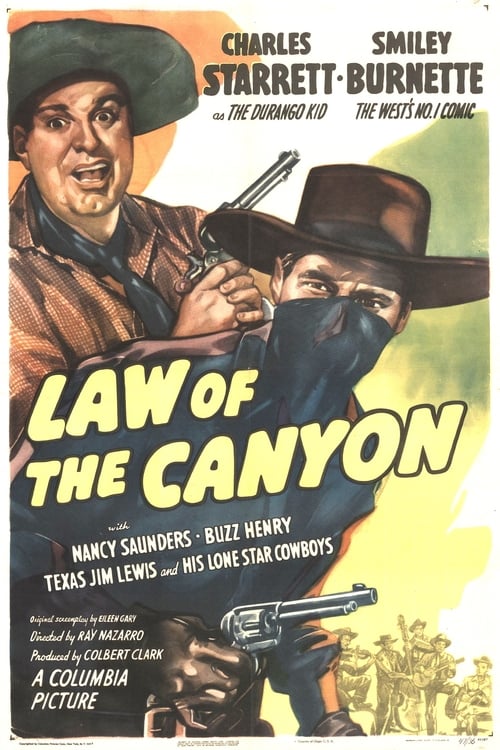
Law of the Canyon
1947
No user ratings available yet
Representation score: 0.3 out of 10
Representation Score
Minimal
1949
ApprovedDirector
R.G. Springsteen
Runtime
60 minutes
Average Rating
No ratings yetNew Showbiz Analysis
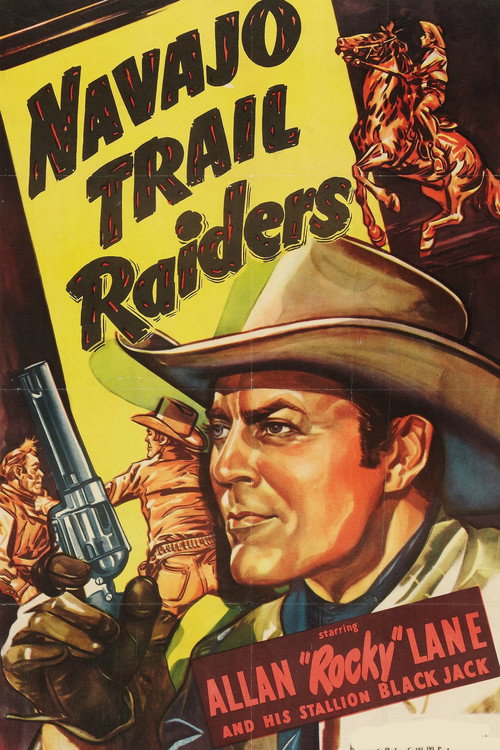
Navajo Trail Raiders opens on the arid, unforgiving terrain of the American Southwest, a landscape that immediately establishes isolation and lawlessness. The film’s argument is straightforward: the survival of the settlement depends on the arrival of Rocky Lane, a rugged, competent outsider who restores order where local men have failed. The pictures like the unmarked-majority hero, who is clean, successful, and never billed for his privilege. The sold meaning is that traditional white masculinity, combined with the specific utility of Native American knowledge, is the only cure for frontier chaos. The internal logic reinforces this hierarchy. Black Jack is the "magical helper," valued for his authentic connection to the land but ultimately subordinate to Lane’s authority. Judy Clark is the prize, framed in soft, sympathetic light, her safety the metric of the hero’s success. The film’s ending, where the raiders are defeated and order restored, is the moral verdict: vigilance and collective defense under male leadership are good. The camera loves the hero’s determined face and treats the settlers’ initial fear as a problem to be solved, not a perspective to be validated. In the context of 1949 B-movie Westerns, this is a standard affirmation of traditional hierarchies. The film does not challenge the frontier’s power structures; it celebrates them. The last image, a safe community under the protection of the competent hero, settles the values: the strong protect the weak, and the "other" is valuable only for his specific utility. The film is a simple, unironic hymn to order, competence, and the restoration of the status quo.
Category Breakdown
The narrative is strictly heteronormative, centering on the heterosexual wedding of Tom and Judy. No queer characters, relationships, or discussions appear on screen.
Judy Clark serves as the static prize whose safety defines the stakes, while male incompetence provides the backdrop for the hero’s competence. The camera treats her as the object of protection rather than an agent of action.
Black Jack, played by a Native American actor, functions as the authentic local guide whose knowledge of the land enables the white lead’s success. He is valued for utility but remains a supporting figure to the unmarked-majority protagonist.
The film treats the frontier community, vigilance, and collective defense as the moral ideal. Order is restored through traditional masculine competence, and the settlement’s safety is the ultimate reward.
No characters display physical, sensory, or cognitive impairments. The bodies on screen are uniformly able-bodied, and disability plays no role in the plot or character dynamics.
Present on Screen
Limited or Absent
Official Synopsis
Outlaw gangs are plundering the freight lines that bring supplies into Yellow Creek. The only thing that will save the town is the insurance money on the freight, but the outlaws are looking to steal that also. Lane comes to town as the best man for the wedding of Tom and Judy, but it will be up to him to find the outlaw boss.
1947
1969
1949

1939
1948
1959
1945
1958
No reviews yet. Be the first to share your thoughts on this movie!
Use the rating form above to leave a star rating and optional review.