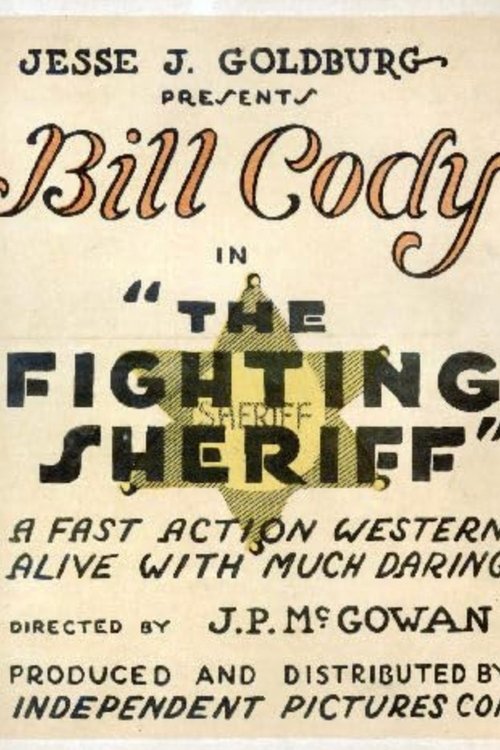
The Fighting Sheriff
1925
No user ratings available yet
Representation score: 2.6 out of 10
Representation Score
Minimal
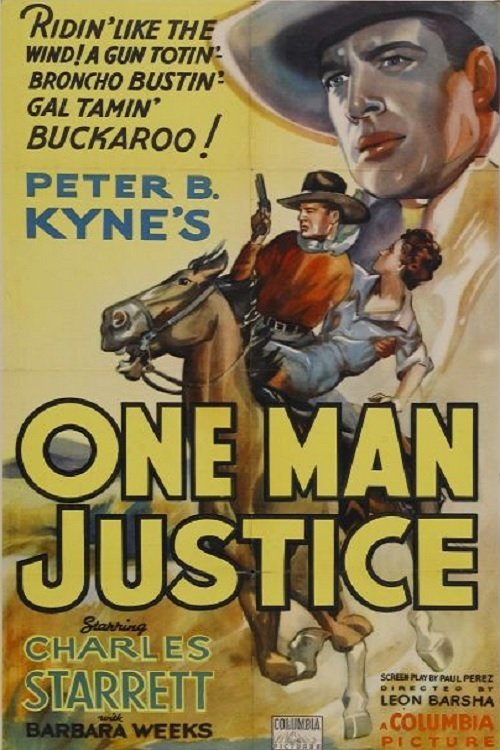
1937
ApprovedDirector
Leon Barsha
Runtime
59 minutes
Average Rating
No ratings yetNew Showbiz Analysis
One Man Justice is a quintessential B-movie Western that adheres strictly to the genre clichés of the 1930s. The narrative is built around traditional archetypes, focusing on a masculine hero restoring order to a lawless territory. The film reinforces existing social hierarchies rather than challenging them. Gender roles are rigid, with the female lead serving as a figure to be protected, and cultural values center on property and individual heroism. Ultimately, the production functions as a morality play that affirms the status quo of its era. It lacks complexity in reflecting multiple aspects of diversity, staying within the narrow bounds of traditional frontier storytelling.
Category Breakdown
The film follows a traditional structure that assumes everyone is straight or cisgender. It centers on a male protagonist and a widow, with no characters representing non-cisgender identities.
The narrative emphasizes traditional gender roles where a woman manages a ranch but primarily serves as a catalyst for the male protagonist. The story upholds patriarchal stability and male leadership.
The cast appears to be a homogeneous Anglo-Saxon group typical of 1930s Westerns. There is no mention of diverse ethnic characters or non-white individuals holding significant roles.
The film promotes conservative frontier ideals, such as vigilantism and the sanctity of property. It affirms traditional Western values without challenging them.
A gunshot-induced amnesia serves as a standard plot device for an identity reveal. It lacks a nuanced exploration of cognitive impairment or neurodivergence.
Present on Screen
Limited or Absent
Official Synopsis
Larry Clarke rides into the town of Mesa, Arizona, from Texas, where he has just sold his ranch. Several people call him "Ted Crockett",who supposedly has been dead for five years, and a bartender advises him to say he is Crockett, as he can aid the law abiding citizens that way. Both Red Grindy, leader of the town's badmen, and Sheriff Ben Adams are fooled by Larry's resemblence to Crockett, as is Crockett's young widow, Mary, until Larry convinces her his isn't. He finds that all of the Crockett cowhands, with the exception of Neal King, are systematically rustling Mary's cattle. Larry takes charge, sends to Texas for his riders and then brings to an end the reign of terror Grindy and his men have over the territory. Creased in the head by a gunshot, Larry is freed of his amnesia and turns out to actually be Ted Crockett.
1925
1927
1939
1927
1934
1938
1926

1940
No reviews yet. Be the first to share your thoughts on this movie!
Use the rating form above to leave a star rating and optional review.