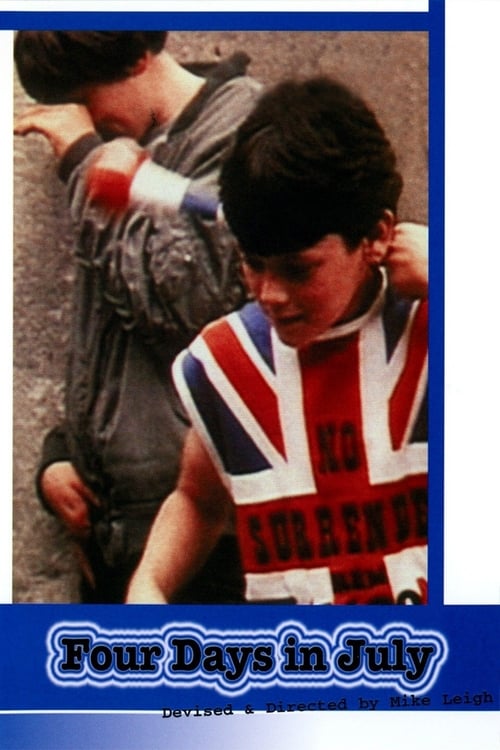
Four Days in July
1984
No user ratings available yet
Diversity score: 5.8 out of 10

1980
TV-PGDirector
Jim Goddard
Runtime
102 minutes
Average Rating
No ratings yetSynopsis
A Liverpool tarmac gang set off for a contract in Middlesbrough. After a day of work, the group are approached by two gypsies who offer them a lucrative side job.
Overall Score
Fair
Category Breakdown
LGBTQ+ Representation
The film offers no evidence of LGBTQ+ characters or narratives addressing non-cisnormative identities. There is no visible representation of queer life within this setting.
Gender Representation
The story centers on a tarmac gang, a setting defined by hyper-masculine labor. There is no indication of female agency or the subversion of traditional gender roles.
Racial & Ethnic Diversity
The inclusion of two gypsies provides ethnic complexity to the narrative. This interaction introduces Romani/Traveller elements that disrupt a purely homogeneous social landscape.
Religious & Cultural Diversity
The focus on a working-class gang navigating socioeconomic struggle suggests a critique of industrial capitalism. It explores the moral ambiguity inherent in marginalized labor groups.
Disability Representation
The narrative contains no mention of characters with visible or invisible disabilities. No representation of disability is present in the provided context.
Strengths
Areas for Improvement
AI Analysis
The Black Stuff operates within the framework of British social realism, prioritizing class dynamics and the precariousness of industrial labor. Its diversity is primarily driven by ethnic intersectionality rather than progressive social representation. While the film lacks LGBTQ+ or disability representation, it avoids a purely homogeneous Anglo-Saxon narrative by introducing Gypsy characters. This adds a layer of ethnic complexity to the working-class setting. Ultimately, the film's strength lies in its depiction of socioeconomic struggle and the interaction between different social strata, even as it remains anchored in traditional masculine labor structures.
1984

1980
1999

1965

1980
1980
1982
1972

1973

2006

2007

1985
No reviews yet. Be the first to share your thoughts on this movie!
Use the rating form above to leave a star rating and optional review.