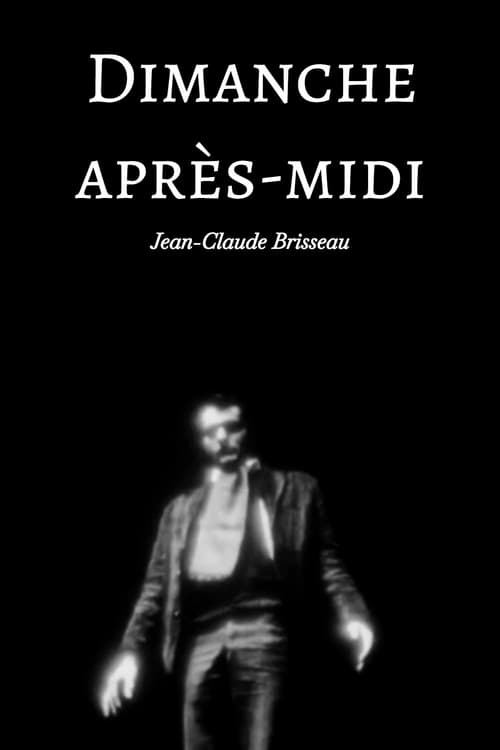
On Sunday Afternoon
1967
No user ratings available yet
Diversity score: 6.5 out of 10

1968
Director
Jean-Claude Brisseau
Runtime
43 minutes
Average Rating
No ratings yetSynopsis
A man stabbed to death is haunted by his memories and fantasies while dying alone.
Overall Score
Fair
Category Breakdown
LGBTQ+ Representation
The film's focus on internal fantasies provides a narrative space for non-normative desires. While specific same-sex intimacy is not explicitly detailed, the director's history suggests an exploration of diverse sexualities through psychological liberation.
Gender Representation
The protagonist's internal fantasies allow for a potential subversion of traditional gender roles. Female characters may function as symbols of agency or existential catalysts rather than mere domestic anchors.
Racial & Ethnic Diversity
There is no evidence regarding the ethnic composition of the cast or setting. The film likely reflects the demographic homogeneity common to 1968 European cinema.
Religious & Cultural Diversity
The film prioritizes individualistic, existentialist philosophy over traditional religious or communal morality. It frames the dying process as a site of personal truth rather than systemic order.
Disability Representation
The protagonist's violent injury places him in a state of extreme physical vulnerability. The narrative risks using this condition as a mere plot device for psychological exploration.
Strengths
Areas for Improvement
AI Analysis
Jean-Claude Brisseau’s work leans toward deconstructing social norms through psychological realism. By centering the narrative on a dying man's subjective memories and fantasies, the film challenges conventional moral frameworks and traditional storytelling structures. The film excels at prioritizing individualistic, existentialist perspectives over communal or religious structures. This focus on the internal experience allows for a critique of the ordered world through the lens of personal, fragmented truth. However, the film lacks clear evidence of racial or ethnic diversity, likely reflecting the era's cinematic trends. Specific character identities and demographic details remain unconfirmed, leaving much of the representation to be inferred through genre tropes.
1967

1991
1972

2018

1974
2012

1974

2004
1993
1986
1976

2010
No reviews yet. Be the first to share your thoughts on this movie!
Use the rating form above to leave a star rating and optional review.