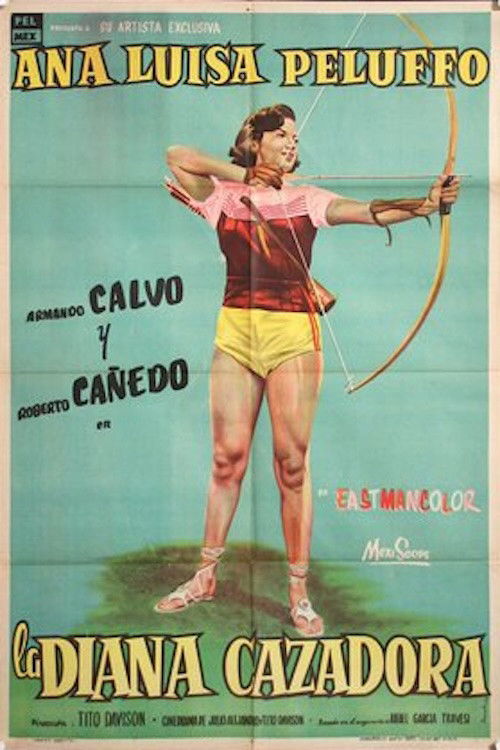
La Diana Cazadora
1957
No user ratings available yet
Representation score: 2.8 out of 10
Representation Score
Limited
1954
Director
Tito Davison
Runtime
0 minutes
Average Rating
No ratings yetNew Showbiz Analysis
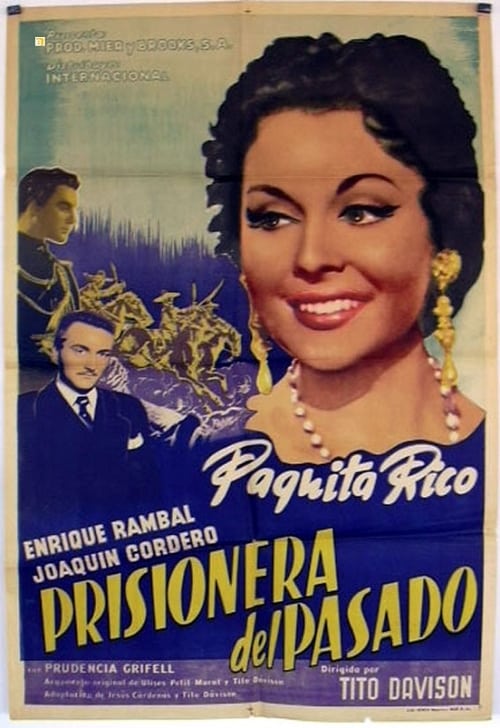
Prisionera del pasado follows the traditional structure of mid-20th-century melodramas. While the mix of Spanish flamenco and Mexican revolutionary themes adds cultural depth, the film adheres closely to the conventions of its time. The narrative upholds established social hierarchies without challenging them, focusing on a conventional romance between a performer and a soldier. It lacks deeper critiques or diverse representation.
Category Breakdown
The film centers on a typical romance between a flamenco singer and a soldier. It does not include any characters with non-binary gender identities or critiques of the assumption that everyone is straight.
A female singer has professional influence, but the setting highlights traditional gender roles. The male soldier symbolizes state authority, reinforcing the gender norms of the time.
The story combines Spanish flamenco traditions with a Mexican Revolutionary context. This blend provides cultural complexity through cross-cultural interactions, although specific casting details are unknown.
Set during the Mexican Revolution, the film likely emphasizes patriotic themes. There is no indication of secularism or the breakdown of traditional family structures.
The story does not mention any characters dealing with physical, sensory, or neurodivergent conditions.
Present on Screen
Limited or Absent
Official Synopsis
Romance between a flamenco singer performing in Mexico and a gov't soldier during the Mexican Revolution.
1957
2008

1946
2011
1947
1972
1954
1959
No reviews yet. Be the first to share your thoughts on this movie!
Use the rating form above to leave a star rating and optional review.