The Wiseman
1991
No user ratings available yet
Diversity score: 5.1 out of 10
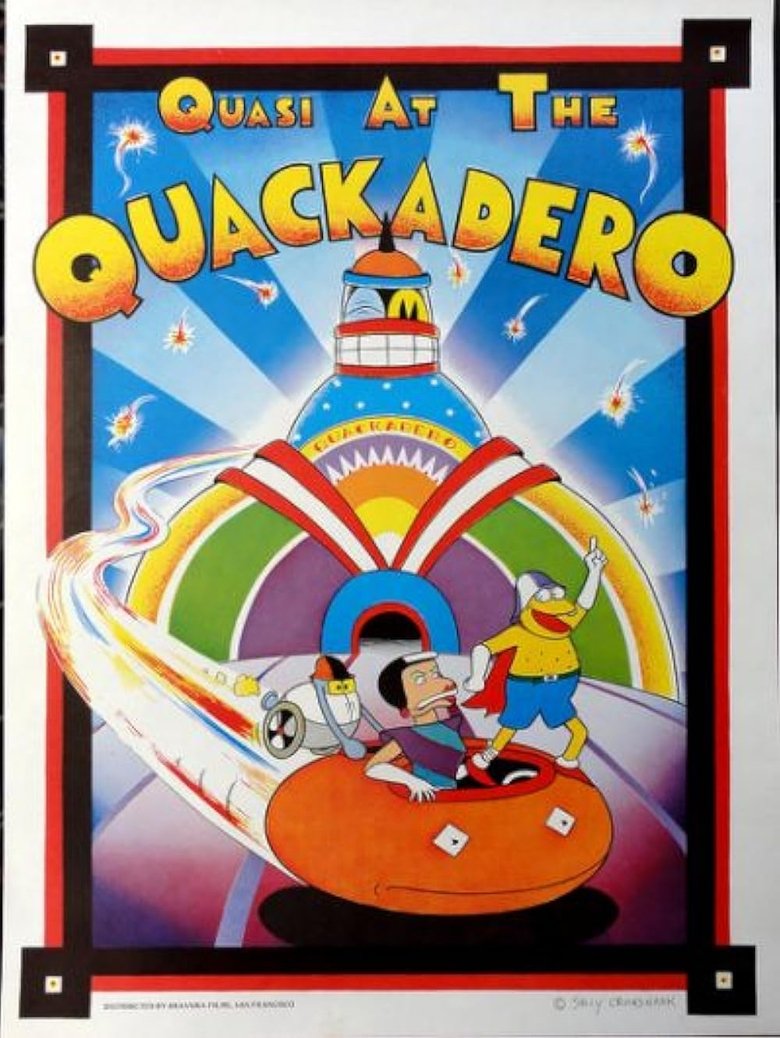
1976
Director
Sally Cruikshank
Runtime
10 minutes
Average Rating
No ratings yetSynopsis
Quasi, a duck, spends the day at a bizarre amusement park with fellow duck Anita and a robot named Rollo, but his rude and annoying behavior soon becomes impossible for his companions to tolerate.
Overall Score
Fair
Category Breakdown
LGBTQ+ Representation
The film operates within a psychedelic, dream-logic framework where heteronormative structures are largely absent. While it lacks explicit depictions of same-sex intimacy, the surreal environment deconstructs gendered expectations through abstraction.
Gender Representation
Traditional gender hierarchies are disrupted by eschewing hero or damsel archetypes. Characters like Quasi and Anita exist in a whimsical ecosystem where agency is tied to exploration rather than patriarchal or matriarchal dominance.
Racial & Ethnic Diversity
The highly stylized, pop-art aesthetic obscures specific racial or ethnic identifiers. While this avoids harmful stereotypes, the film lacks intentionality regarding diverse casting or explicit intersectional representation.
Religious & Cultural Diversity
The narrative prioritizes subjective experience and dream-logic over singular moral or religious truths. It avoids promoting traditional Western institutions like family or religion, favoring a sense of whimsical detachment.
Disability Representation
The film's focus on fragmented movement and wacky physics mirrors the logic of sensory processing. However, without specific character arcs centered on disability, this remains an interpretive subtext.
Strengths
Areas for Improvement
AI Analysis
Sally Cruikshank’s work is a landmark of experimental animation that prioritizes aesthetic abstraction over traditional moralizing. By utilizing a surrealist, non-linear narrative, the film successfully avoids the rigid character hierarchies and social roles found in mainstream studio productions. However, the film's commitment to abstraction is a double-edged sword for representation. While the pop-art style prevents the reinforcement of harmful stereotypes, it also obscures specific identities, making it difficult to find intentionality in racial or gendered expression. Ultimately, the film's strength lies in its subversion of reality. It challenges structured storytelling by centering on a landscape untethered from civic or social responsibility, creating a space where traditional social norms simply do not apply.
1991
1993
2005
1961
2012

1996
1979
1970
1969
1971
2007
1974
No reviews yet. Be the first to share your thoughts on this movie!
Use the rating form above to leave a star rating and optional review.