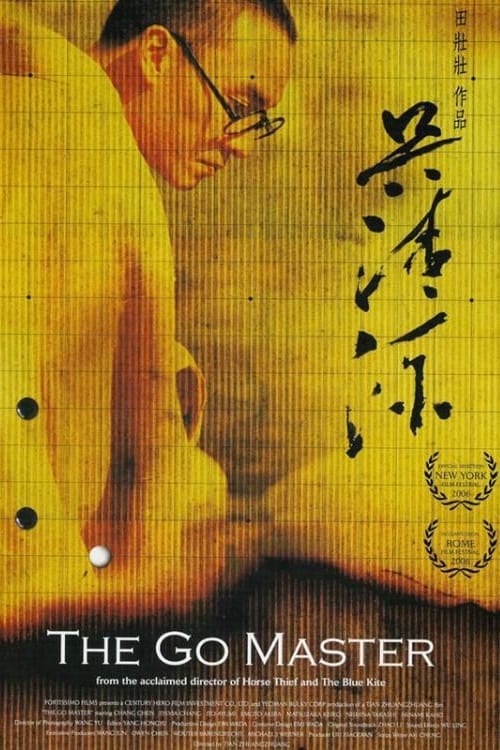
The Go Master
2007
No user ratings available yet
Representation score: 3.3 out of 10

Representation Score
Fair
1982
Director
Duan Jishun, Junya Satō
Runtime
123 minutes
Average Rating
No ratings yetNew Showbiz Analysis
The Go Masters is a nuanced period drama that uses personal relationships to critique geopolitical tensions. Its primary strength lies in challenging ethnic uniformity and nationalist propaganda by highlighting human connections. However, the film adheres to traditional social structures, relying heavily on straight-centered family units and male-dominated professional pursuits. This limits the role of female characters. Ultimately, the film excels as a study of reconciliation. It moves beyond simple political binaries to explore how individual lives are shaped by broader historical conflicts.
Category Breakdown
The film focuses on a cross-cultural marriage and does not include any queer narratives or characters with non-cisgender identities.
The story emphasizes the intellectual prowess of male Go masters. A key female character plays a crucial role, but her role is defined by marriage and motherhood.
The film explores the interaction between Japanese and Chinese identities, disrupting nationalist clichés through a cross-cultural marriage and professional relationship.
The story avoids simplistic good-versus-evil clichés, presenting characters as individuals influenced by historical events. The game of Go symbolizes intellectual pursuit across political boundaries.
There are no visible or hidden disabilities shown among the main characters.
Present on Screen
Limited or Absent
Official Synopsis
Ten years before the outbreak of the Second World War in Asia, a Japanese Go master and his Chinese rival meet in China to play a game of Go (loosely described as an Asian version of chess). It soon becomes evident that the Chinese master's son is the most talented player that the Japanese master has ever encountered, and he convinces the boy's father to let him bring the child back to Japan to train him as a professional Go player. Years pass, and as the young Chinese master grows to maturity in Japan, the Japanese invasion of China forces him to choose between his triumphant career and his loyalty to his native country. His decision is complicated by his marriage to the daughter of the Japanese master, with whom he has produced a child. His choice will profoundly alter the lives of two families. Their saga serves as a reflection of the tragic relations between their two great countries, and the possibility of reconciliation and healing.
2007
1967
1995
1943
1978
1991
1919
1955
No reviews yet. Be the first to share your thoughts on this movie!
Use the rating form above to leave a star rating and optional review.