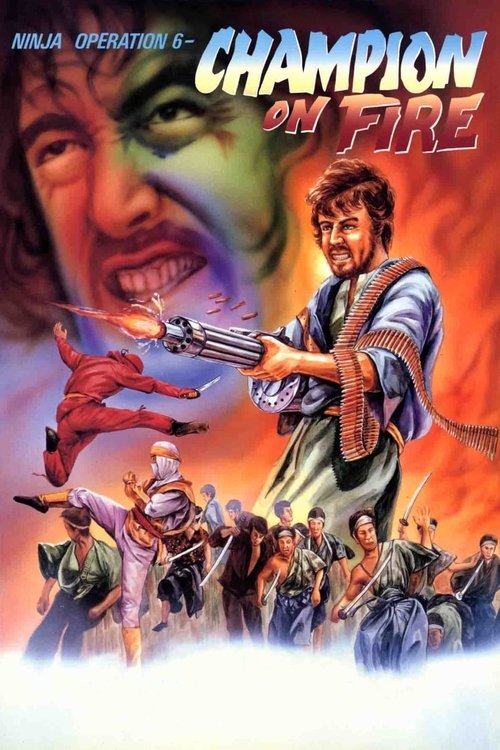
Ninja Operation 6: Champion on Fire
1987
No user ratings available yet
Diversity score: 3.1 out of 10
1987
Director
Joseph Lai San-Lun
Runtime
90 minutes
Average Rating
No ratings yetSynopsis
"For the evil forces of THE BLACK NINJA EMPIRE there is no law of justice only corruption. A saviour, "THE PRINCE OF JUSTICE", is born to save and protect mankind from this wickedness and his chosen protector is the fearless Golden Ninja. The Empire in its quest to find the 'Prince', brutalize and murder innocent victims, before the Golden Ninja is confronted." - VHS Back of the box description Hong Kong cut and paste edit of the 1981 Taiwanese Film "賭命一條龍" (The Daredevil/Desperado) with new ninja scenes.
Overall Score
Limited
Category Breakdown
LGBTQ+ Representation
The film lacks any evidence of non-cisnormative identities or same-sex intimacy. It relies on traditional binary archetypes of good versus evil common to 1980s martial arts cinema.
Gender Representation
Narrative focus centers on male-coded savior archetypes like the 'Prince of Justice.' Power dynamics rely on conventional masculine leadership and physical prowess rather than diverse gender roles.
Racial & Ethnic Diversity
The cast is predominantly East Asian, providing inherent ethnic representation. However, the story follows standard martial arts tropes that lack nuanced intersectional depth or subversion of ethnic hierarchies.
Religious & Cultural Diversity
The story uses a traditional morality play framework of righteousness versus wickedness. It frames conflict through a hero-versus-villain lens rather than critiquing systemic institutions or hegemony.
Disability Representation
There is no documented evidence regarding the inclusion of characters with visible or invisible disabilities within the film's narrative.
Strengths
Areas for Improvement
AI Analysis
Ninja Operation 3 is a product of its era, functioning as a standard genre piece built on traditional heroic archetypes. Its production history as a 'cut and paste' edit of an earlier Taiwanese film suggests a focus on commercial tropes over intentional social representation. The film's structure relies heavily on binary moralities and masculine-coded heroism. While it provides East Asian representation through its cast, it lacks the depth required to explore intersectional identities or subvert social hierarchies. Ultimately, the work prioritizes stylized combat and classic good-versus-evil storytelling, offering very little in the way of diverse or nuanced character perspectives.
1987
1987
1986
1987

1985
1987
1987
1987
1990
1992
1980
1987
No reviews yet. Be the first to share your thoughts on this movie!
Use the rating form above to leave a star rating and optional review.