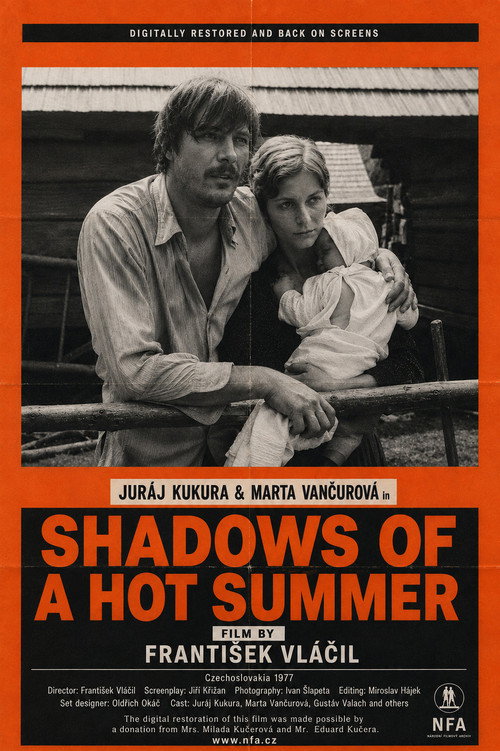
Shadows of a Hot Summer
1978
No user ratings available yet
Representation score: 3.2 out of 10
Representation Score
Fair
1985
Director
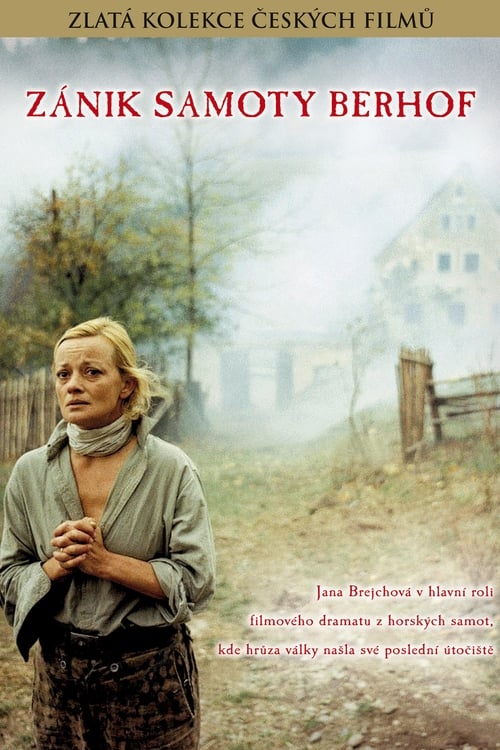
Jiří Svoboda
Runtime
101 minutes
Average Rating
No ratings yetNew Showbiz Analysis
This post-WWII drama focuses on the psychological impact of isolation and shifting geopolitical borders. It functions primarily as a historical realist piece rather than a vehicle for modern identity politics. The film's strength lies in its exploration of ethnic friction and the breakdown of social orders in a border region. However, it adheres to the traditional gender roles and straight relationships typical of its era. Ultimately, the work lacks contemporary markers of diversity, focusing instead on the survivalist themes of a changing Central European landscape.
Category Breakdown
The film does not depict any non-binary gender identities or same-sex relationships. Its focus is on the socio-political aftermath of World War II, which traditionally emphasizes straight relationships.
Jana Brejchová’s prominent role highlights the female experience. Characters likely navigate the tension between domestic stability and the chaos of shifting post-war borders.
The Czech-Polish border setting introduces inherent ethnic complexity. While the cast appears predominantly Central European, the story likely explores the friction between different national identities during border shifts.
The setting suggests a critique of collapsing agrarian hierarchies and traditional institutions. The film leans toward historical realism rather than explicit ideological framing.
There is no evidence of characters with disabilities playing a central role. Physical trauma from the war likely serves as a symbol of national suffering rather than individual ability to act.
Present on Screen
Limited or Absent
Official Synopsis
Drama set on an isolated farm on the Czech-Polish border immediately after the end of WWII.
1978
1985

1959
1978
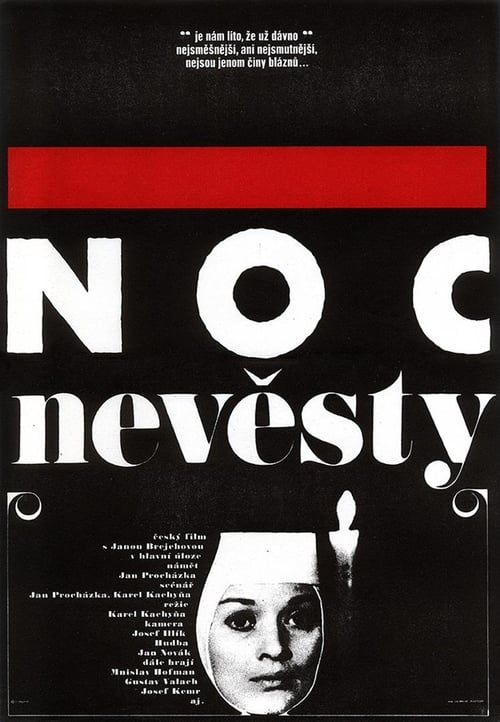
1967
1979

1987
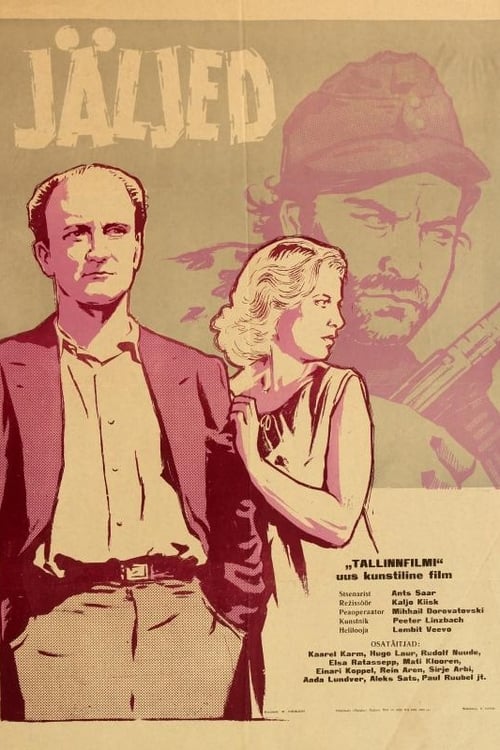
1964
No reviews yet. Be the first to share your thoughts on this movie!
Use the rating form above to leave a star rating and optional review.