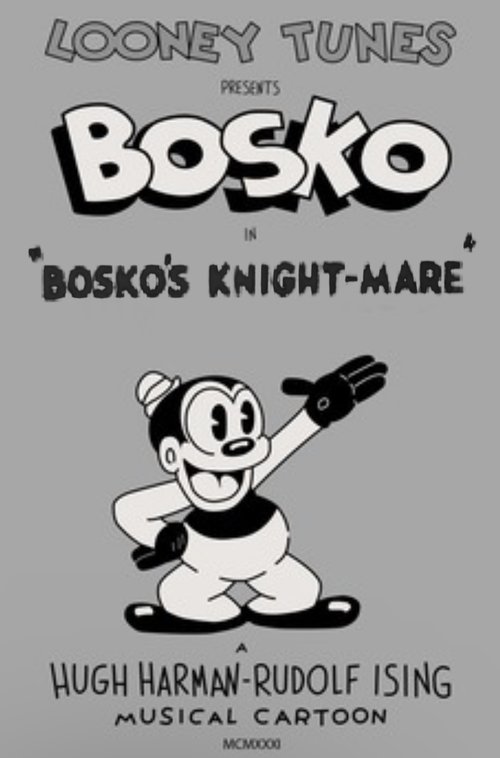
Bosko's Knight-Mare
1933
No user ratings available yet
Representation score: 1.1 out of 10
Representation Score
Minimal
1932
Director
Hugh Harman
Runtime
7 minutes
Average Rating
No ratings yetNew Showbiz Analysis
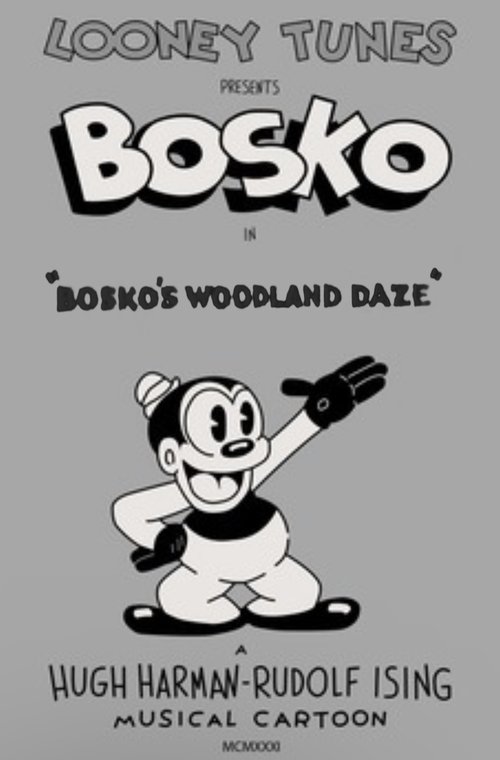
Bosko's Woodland Daze serves as a historical artifact that highlights early racial inclusion while upholding the social norms of the 1930s. The presence of a Black protagonist is a significant step forward from the era's typical casting, using rhythmic, jazz-influenced animation styles. However, the film remains rooted in its time, prioritizing visual spectacle and slapstick humor over deeper social commentary. It lacks intentional engagement with gender, disability, or LGBTQ+ representation, functioning primarily as whimsical entertainment. Ultimately, while the main character offers some racial visibility, the overall narrative structure does not challenge established cultural or gender hierarchies.
Category Breakdown
The film focuses on a whimsical, dream-based exploration of a woodland setting. There are no non-straight or non-cisgender identities or character arcs that explore LGBTQ+ themes.
The narrative follows traditional gender roles and dynamics. It does not provide nuanced roles for female characters or challenge traditional gender hierarchies.
Bosko, a Black anthropomorphic character, stands out as a significant departure from predominantly white characters in 1932 animation. However, the character design does not delve deeply into multiple aspects of identity.
The film operates within a traditional framework of escapist, surreal comedy. It emphasizes slapstick humor and does not address secular or anti-Western themes.
The film does not depict characters with visible or invisible disabilities. There is no representation of neurodivergence or physical impairments.
Present on Screen
Limited or Absent
Official Synopsis
While romping through the forest, Bosko falls asleep and dreams of giants and gnomes.
1933
1932
1931
1930
1932
1931
1932
1933
No reviews yet. Be the first to share your thoughts on this movie!
Use the rating form above to leave a star rating and optional review.