The Mad Room
1969
No user ratings available yet
Representation score: 2.6 out of 10
Representation Score
Limited
1974
RDirector
Pete Walker
Runtime
88 minutes
Average Rating
No ratings yetNew Showbiz Analysis
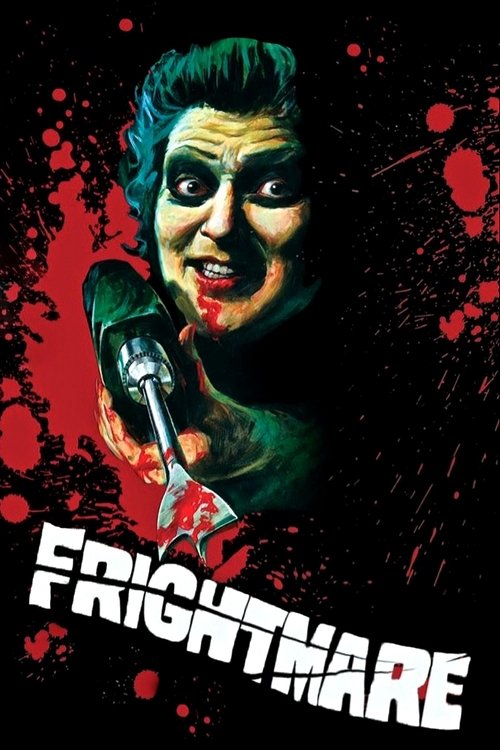
Frightmare is a visceral study of domestic transgression and familial decay. It challenges the stability of the traditional home by presenting the family unit as a source of inherited criminality and predatory behavior. The film adheres to 1970s British exploitation conventions, prioritizing psychological horror over broad social commentary. While it offers a dark subversion of maternal roles, it lacks diversity in its representation of identity. Ultimately, the work functions as a genre-driven exploration of instability, focusing on the breakdown of social structures through a narrow, homogeneous lens.
Category Breakdown
There are no LGBTQ+ characters or narratives addressing non-straight identities in the film.
Dorothy is a central protagonist with extreme, pathological ability to act. She disrupts the 'nurturing mother' stereotype, but her instability is primarily used as a horror device.
The narrative centers on a homogeneous familial unit with no indication of a diverse cast.
The film critiques the traditional Western family by portraying the domestic sphere as a site of cannibalism. It questions the stability of the ideal family institution.
The plot revolves around mental health and institutionalization. However, 'criminal insanity' is used largely as a suspense device rather than a nuanced depiction of neurodivergence.
Present on Screen
Limited or Absent
Official Synopsis
In 1957, Dorothy and Edmund Yates were committed to an institution for the criminally insane, she for acts of murder and cannibalism and he for covering up her crimes. Fifteen years later, they are pronounced fit for society and released. However, in Dorothy's case the doctors may have jumped the gun a bit. Edmund and eldest daughter, Jackie, try to discover just how far Mother's bloodlust has taken her. Meanwhile, youngest daughter Debbie begins to explore the crazy roots of her family tree as fully as possible.
1969
1974

1971

1964
1971
1965

1998
1983
No reviews yet. Be the first to share your thoughts on this movie!
Use the rating form above to leave a star rating and optional review.