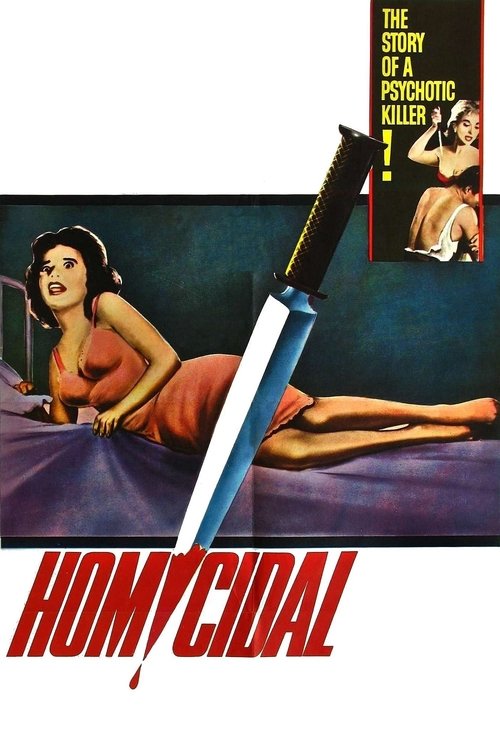
Homicidal
1961
No user ratings available yet
Representation score: 1.7 out of 10
Representation Score
Limited
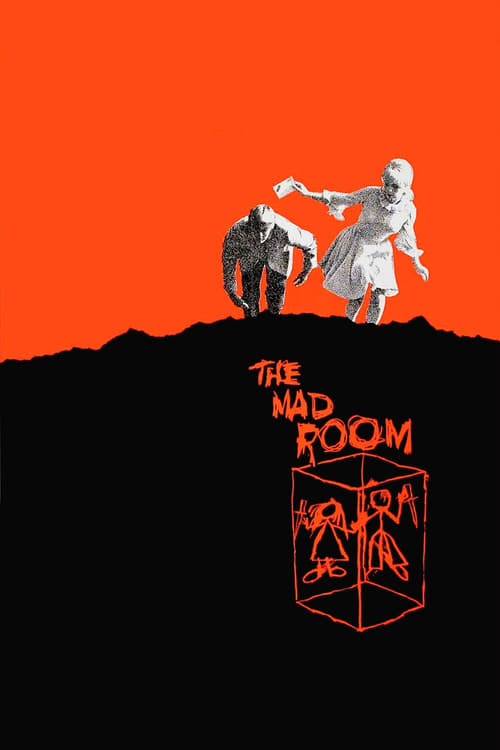
1969
MDirector
Bernard Girard
Runtime
92 minutes
Average Rating
No ratings yetNew Showbiz Analysis
The Mad Room is a period-specific psychological thriller that operates strictly within the social and moral norms of 1969. The narrative relies on traditional clichés, prioritizing suspense and the threat of social scandal over diverse or layered storytelling. While the film centers on female characters, their roles are defined by domestic anxieties and the pursuit of marriage. The plot is driven by the need to maintain a respectable image, which restricts the scope of character's ability to drive the story. Representation of disability is limited to the 'dangerous patient' cliché. Mental illness is used primarily as a tool for horror and tension rather than a nuanced exploration of neurodiversity.
Category Breakdown
The film focuses on traditional social structures centered around straight relationships and domestic stability. There is no evidence of characters with non-binary or transgender identities, nor any critique of these norms.
Female characters play key roles in driving the suspense, but their actions are closely tied to marriage and maintaining a domestic reputation. Ellen's motivations revolve around protecting her social standing and upcoming wedding.
The cast appears uniform, reflecting the typical makeup of late-1960s British psychological thrillers. There are no characters from diverse racial backgrounds.
The story adheres to conventional moral structures and emphasizes the importance of the nuclear family. It avoids any critique of Western institutions or secular viewpoints.
Mental illness is a central plot device, serving as a source of tension. Characters are portrayed based on past actions rather than exploring their neurodivergent experiences in depth.
Present on Screen
Limited or Absent
Official Synopsis
Ellen Hardy gets a rude awakening when she discovers that her brother and sister are scheduled to leave their mental institution. As children, they were put there after killing their parents. Ellen, who now lives in the house of an old widow, Mrs. Armstrong, takes them in. But if their secret gets out, it could jeopardize Ellen's plans to wed Mrs. Armstrong's stepson. She struggles with anxiety -- until Mrs. Armstrong suddenly turns up dead.
1961
1965
1974

1971
1971
1956
1979
1971
No reviews yet. Be the first to share your thoughts on this movie!
Use the rating form above to leave a star rating and optional review.