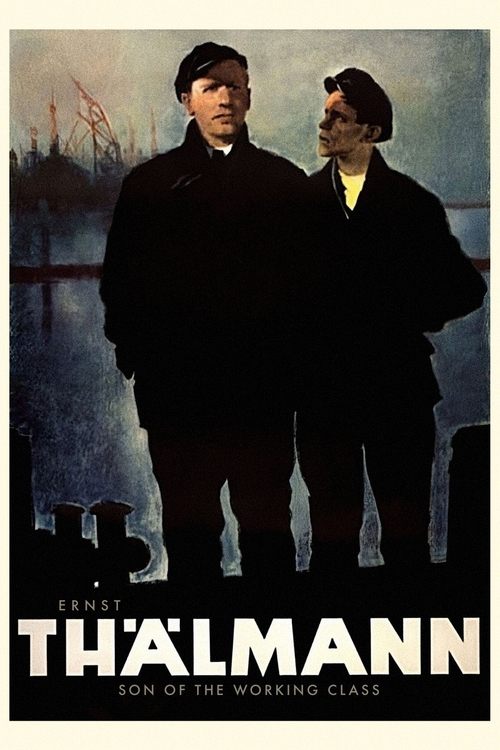
Ernst Thälmann – Son of the Working Class
1954
No user ratings available yet
Representation score: 3.5 out of 10
Representation Score
Minimal
1955
Director
Kurt Maetzig
Runtime
140 minutes
Average Rating
No ratings yetNew Showbiz Analysis
The film functions as a specialized ideological tool, emphasizing a Marxist-Leninist framework over broader demographic diversity. It effectively critiques bourgeois power structures and Western institutions, presenting systemic rebellion as a moral imperative. However, the narrative operates within a rigid, traditional framework. It centers ability to act on a homogeneous demographic, largely ignoring the complexities of race, gender, and disability in favor of idealized worker archetypes. Ultimately, while the film successfully challenges conventional morality by championing the oppressed, it lacks the demographic diversity necessary for a broader social representation.
Category Breakdown
The film does not include any representation of LGBTQ+ identities. The story focuses solely on the socio-political mobilization of workers.
Political leadership roles are predominantly filled by male characters. Women play important roles in organizing and striking, but the film emphasizes a hierarchy where leadership is a male trait.
The cast is primarily made up of white German actors. The film does not use diverse casting to broaden its narrative scope beyond its specific historical context.
The film offers a deep critique of capitalist and Western institutions. It presents class identity as the main driver of history through a Marxist-Leninist perspective.
There is no visible representation of neurodivergence or physical disabilities. Characters are portrayed as idealized examples of a healthy, productive workforce.
Present on Screen
Limited or Absent
Official Synopsis
This film is the second of a two-part historical and biographical portrait of the communist politician and anti-fascist Ernst Thälmann. Autumn, 1918: Somewhere on Germany’s western front, Ernst Thälmann, age twenty-four, is calling on his fellow soldiers to put down their guns and join him in the communist struggle at home. When Hamburg’s Police Commissioner blocks a much-needed food shipment to the workers of Petrograd, Ernst battles to see it allowed through. Until his murder on August 18, 1944, Ernst remained true to his political convictions in the face of many setbacks.
1954
2020
1938

2017
1980
1995
1957
1919
No reviews yet. Be the first to share your thoughts on this movie!
Use the rating form above to leave a star rating and optional review.