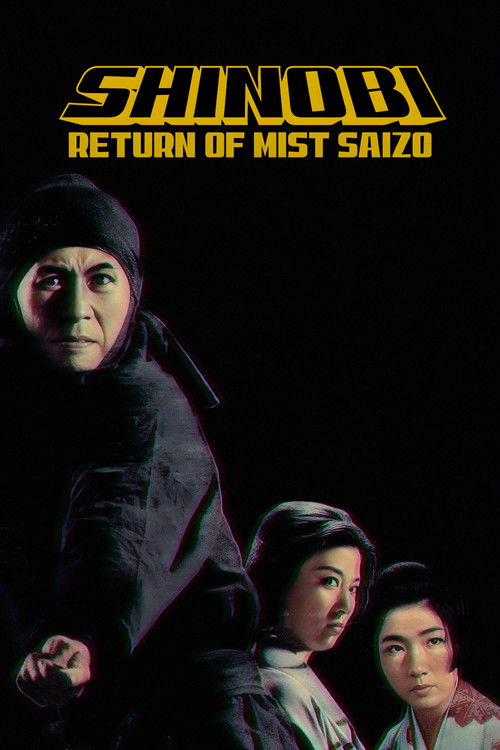
Shinobi No Mono 5: Return of Mist Saizo
1964
No user ratings available yet
Representation score: 3.0 out of 10

Representation Score
Limited
1959
Director
Sadatsugu Matsuda
Runtime
94 minutes
Average Rating
No ratings yetNew Showbiz Analysis
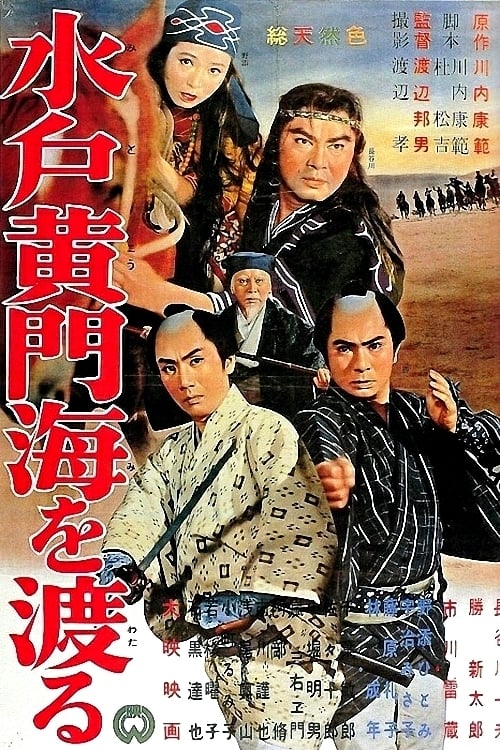
Lord Mito 2: The Nation's Vice Shogun is a quintessential period drama that prioritizes moral justice over demographic diversity. It functions as a critique of systemic corruption rather than a vehicle for social representation. The film's inclusion is limited by its adherence to the rigid social hierarchies of the Genroku era. While it features a prominent female icon, the core narrative remains tethered to traditional, homogeneous socio-political structures. Ultimately, the work excels at exploring the tension between individual morality and institutional malpractice, even as it remains culturally and socially specific to its historical context.
Category Breakdown
The film adheres to the assumption that everyone is straight or cisgender, typical of mid-century Japanese cinema. There is no depiction of non-binary gender identities or same-sex relationships.
The film features a prominent female lead, Misora Hibari, who plays a significant role. However, the main storyline focuses on male-dominated themes such as shogunal succession and clan politics.
The narrative is inherently homogeneous, focusing on Japanese historical continuity. It lacks a platform for multi-ethnic or diverse casting dynamics within its period setting.
The film critiques institutional decay by centering its conflict on corrupt usurpers. This provides a sophisticated layer of morality within a traditional historical framework.
There is no mention of characters navigating physical, sensory, or neurodivergent challenges.
Present on Screen
Limited or Absent
Official Synopsis
After settling the matter of shogunal succession, the retired Old Lord of Mito finds himself in a sea of trouble when he gets involved in the succession of the Takamatsu clan. The usurpers try by every means to effect their takeover, even if it leads to blood being spilled. Along with Kaku and Suke, the elder must face the most dangerous time of his life, in a battle against those corrupt individuals who would use any means to further their dastardly conspiracy, regardless of how many lives might be destroyed. The great Misora Hibari gives a bravura performance, as does the rest of this all-star cast. This is another outstanding effort on the part of the Toei Films, blending fact and fiction to bright back Japan’s golden era of the Genroku period.
1964
1974
1961

1956
1958
1967
1960
2010
No reviews yet. Be the first to share your thoughts on this movie!
Use the rating form above to leave a star rating and optional review.