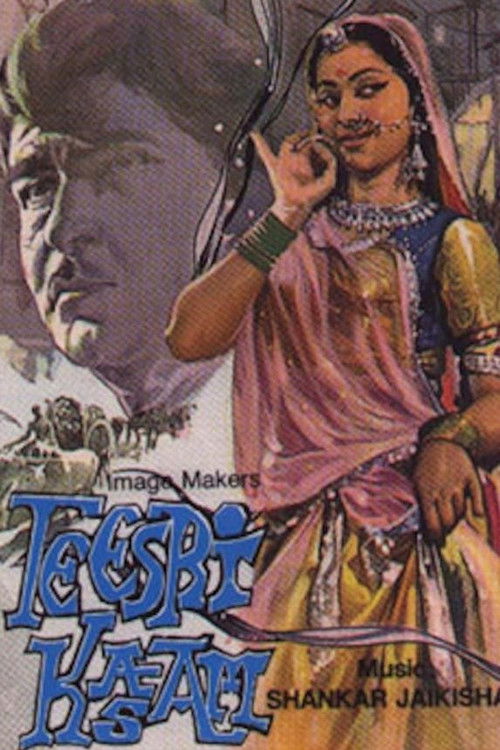
Teesri Kasam
1966
No user ratings available yet
Representation score: 4.3 out of 10
Representation Score
Limited
1965
Director
Satyajit Ray
Runtime
65 minutes
Average Rating
No ratings yetNew Showbiz Analysis
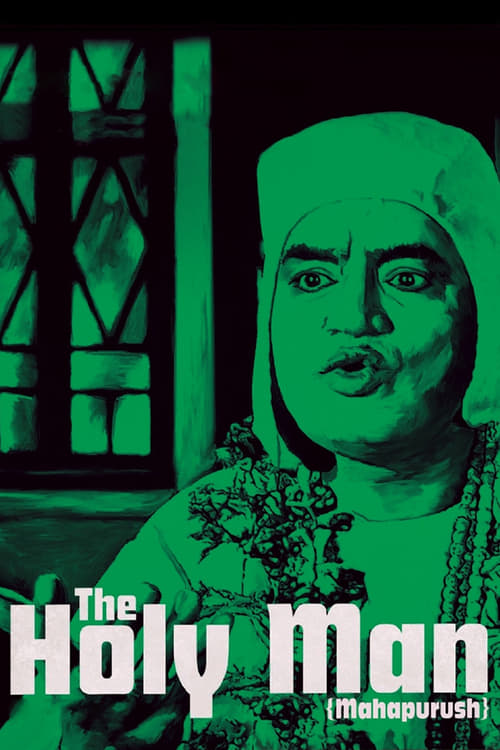
Satyajit Ray’s work stands apart from Western cinematic norms by centering a localized Bengali cultural framework. The film uses a disruptive outsider to challenge established social hierarchies and traditional patriarchal authority within a household. While the story lacks representation for LGBTQ+ identities or disabilities, it excels in its cultural positioning. It prioritizes non-hegemonic storytelling by focusing on subjective morality and the tension between tradition and spiritual fluidity.
Category Breakdown
The film does not include any LGBTQ+ characters or narratives. Instead, it focuses on traditional romantic and family relationships.
The story introduces a wandering holy man who challenges the authority of male figures. The youngest daughter becomes a central figure in disrupting social norms.
This Bengali film centers a non-Western cast, providing a culturally specific perspective that resists Hollywood-centric norms.
The film employs a wandering holy man to critique rigid social roles and institutional skepticism. It explores moral relativism through a protagonist who exists outside conventional village structures.
There is no documented evidence of the portrayal of physical or neurodivergent disabilities in this work.
Present on Screen
Limited or Absent
Official Synopsis
A wandering baba initiates a widower layer and his youngest daughter, irritating her boyfriend Satya and the ever-skeptical Nibaran.
1966
1958
2001
1969
2003

2015

2014

2013
No reviews yet. Be the first to share your thoughts on this movie!
Use the rating form above to leave a star rating and optional review.