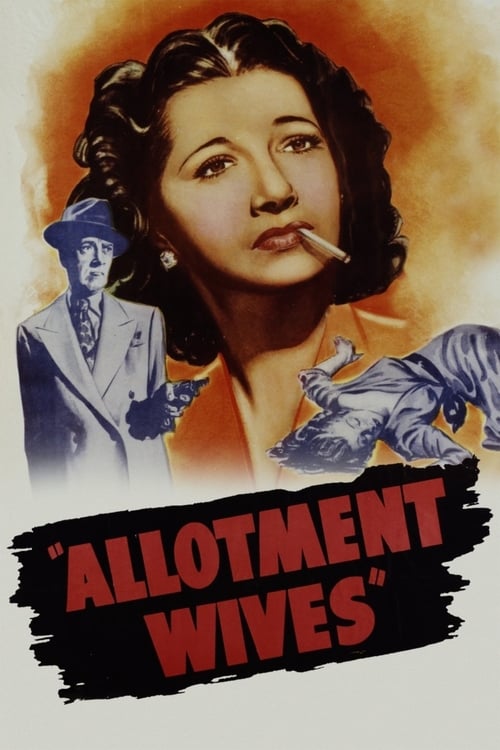
Allotment Wives
1945
No user ratings available yet
Representation score: 1.4 out of 10

Representation Score
Minimal
1937
PassedDirector
Errol Taggart
Runtime
61 minutes
Average Rating
No ratings yetNew Showbiz Analysis
The film opens with the domestic anxiety of Jane Carson, a woman whose face signals the weight of social expectation before the chaos of her marriage unfolds. The Women Men Marry (1937) sells a vision of domestic realism where the true labor of marriage falls on the women. Jane and her sister Claire are the moral centers, navigating a social minefield where men like Bill Raeburn are reactive, often bumbling, and ultimately dependent on female pragmatism to maintain stability. The camera lingers on the women’s faces during crises, treating their anxiety and cynicism with respect, while the men are framed in reaction, their incompetence played for gentle laughs rather than threat. The film’s argument is that marriage is a work in progress, a negotiation of social grace rather than a spiritual destiny. The religious cult in the plot is exposed as a racket by the secular press, positioning rational journalism over faith-based manipulation. However, the film’s internal logic pulls toward a traditional resolution: the women’s resilience absorbs the men’s failures, but the final image settles into a collective marital unit where individual ego is subsumed by the collective. The "punishment" is the loss of romantic fantasy to the mundane reality of partnership. In the context of 1930s Hollywood, the film offers a nuanced view of gender dynamics, showing women as the true architects of the relationship while still rewarding the stability of the nuclear family. It does not subvert the institution of marriage but rather humanizes its maintenance, treating the annoying and compromising as the true texture of love. The last image is a wide shot of the group in exhausted unity, affirming that the moral verdict is the acceptance of marital reality over the fantasy of perfect romance. The film’s value lies in its honest depiction of domestic labor, even as it ultimately reinforces the traditional family structure as the desired end state.
Category Breakdown
No queer characters or intimacy appear. The romantic dynamics are strictly heterosexual, focusing on marriage and extramarital affairs between men and women.
Women drive the domestic and moral narrative, with Jane as the emotional anchor and Claire as the cynical counterweight. Men are reactive and outmaneuvered, yet the film settles into a traditional marital unit where female resilience absorbs male failure.
The cast is entirely white, reflecting the 1937 industry standard. No racial dynamics or non-white characters are depicted; whiteness functions as the unmarked, invisible norm of the social world.
The religious cult is framed as a criminal racket exposed by the press, positioning secular journalism as rational authority. Marriage is presented as a pragmatic maintenance of social order rather than a spiritual destiny.
No characters with physical, sensory, or cognitive impairments are present. The cast is conventionally able-bodied, and no disability is mentioned, mocked, or utilized as a plot device.
Present on Screen
Limited or Absent
Official Synopsis
A newsman with a no-good wife exposes a religious racket with a newswoman who loves him.
1945

1933
1936

1932
1934
1932
1949

1937
No reviews yet. Be the first to share your thoughts on this movie!
Use the rating form above to leave a star rating and optional review.