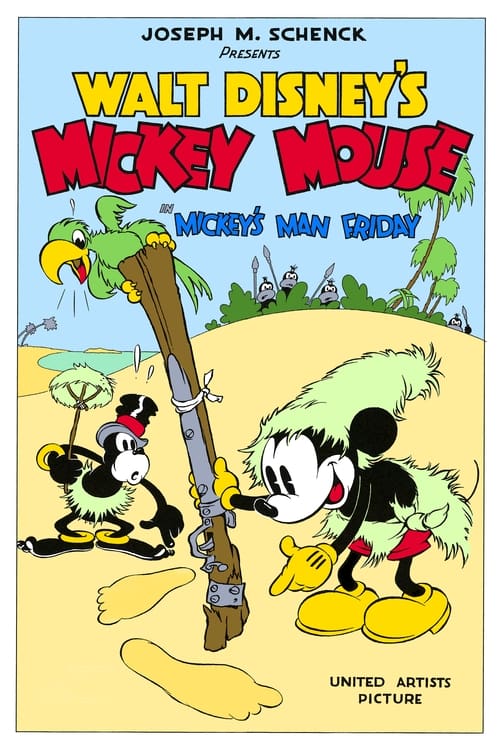
Mickey's Man Friday
1935
No user ratings available yet
Representation score: 1.3 out of 10

Representation Score
Minimal
1936
ApprovedDirector
Burt Gillett, Tom Palmer
Runtime
7 minutes
Average Rating
No ratings yetNew Showbiz Analysis
This 1936 animated short relies heavily on established clichés of its time, focusing on the comedic conflict between solitude and companionship. The storytelling reflects mid-20th-century perspectives on individualism and the 'other.' While the film uses a classic literary figure, it lacks the complexity needed for modern storytelling that reflects multiple aspects of identity. Character dynamics are confined to traditional archetypes that reinforce existing social hierarchies. Ultimately, the work serves as a typical comedic exercise. It relies on reductive depictions of non-Western characters and conventional masculine independence.
Category Breakdown
The film focuses entirely on the interaction between a cow and a human. It contains no depictions of non-assuming gender matches what was assigned at birth identities or same-sex intimacy.
The main character, Crusoe, embodies the traditional image of a rugged, independent man. While the cow named Molly Moo-Cow has a feminine name, her role focuses on social integration rather than challenging traditional gender roles.
The film includes characters who are presented as cannibals, which serves as a simplistic plot device. These characters are shown through a colonialist perspective, emphasizing conflict with the Western protagonist.
The narrative promotes Western ideals of individualism and self-reliance. It does not explore or critique systemic power structures or diverse cultural institutions.
The characters appear to have standard physical abilities. There are no visible or invisible disabilities depicted in the story.
Present on Screen
Limited or Absent
Official Synopsis
Molly Moo-Cow washes to shore on an island, the one occupied by Robinson Crusoe. Much of the short is Crusoe extolling the virtues of the solitary life, Molly trying to ingratiate herself to Crusoe and Crusoe trying to get rid of her. He finally succeeds-just before cannibals come ashore, capture Crusoe and dump him in a pot. From the time they grab him Crusoe is yelling for help (from whom is unclear, given that he wants the island to himself).
1935
1935
1974
1935
1931
1934
1935

1925
No reviews yet. Be the first to share your thoughts on this movie!
Use the rating form above to leave a star rating and optional review.