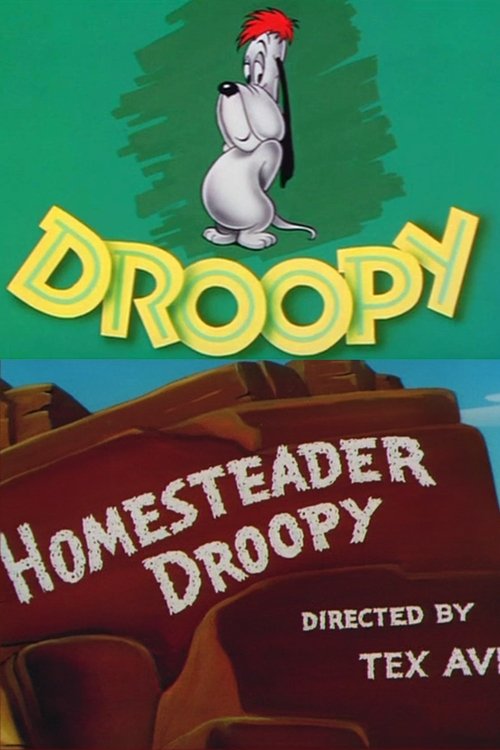
Homesteader Droopy
1954
No user ratings available yet
Representation score: 0.7 out of 10

Representation Score
Minimal
1956
NRDirector
Bill Justice
Runtime
7 minutes
Average Rating
No ratings yetNew Showbiz Analysis
A Cowboy Needs a Horse is a classic mid-century Western animation that relies heavily on genre clichés to drive its straightforward narrative. The film reinforces traditional gender and racial hierarchies, using these elements to support the protagonist's journey. While it includes moments of diplomacy, these serve to validate the protagonist's path rather than providing nuanced cultural insights. Ultimately, the film functions as a period piece that celebrates the idealized individual hero, adhering closely to the social norms and storytelling conventions of 1956.
Category Breakdown
The main character is straight and cisgender, and there are no queer or non-cisgender identities represented in the story.
The male protagonist embodies traditional masculinity and leads the story through typical masculine archetypes. The female character is portrayed as passive and exists mainly to support the male protagonist’s journey.
Indigenous peoples are depicted using traditional Western stereotypes from the 1950s. Their interactions with the main character serve primarily as a plot device for the hero's growth.
The story upholds Western frontier mythology and celebrates an idealized individual hero. It emphasizes a conventional moral landscape centered around the hero's journey.
There are no visible or invisible disabilities portrayed in the film.
Present on Screen
Limited or Absent
Official Synopsis
A young boy dreams of being a cowboy. After he gets the basics, as outlined in the title song, he's attacked by Indians. He runs out of bullets and manages to lasso them. He smokes the peace pipe with their chief. A robber is holding up a stagecoach and he rides to the rescue, refusing the reward. He also saves a train from a dynamited bridge, and a girl tied to a cactus, before riding into the sunset (and back to his suburban bed).
1954

1951
1949

1946
1934
1951
1937
1963
No reviews yet. Be the first to share your thoughts on this movie!
Use the rating form above to leave a star rating and optional review.