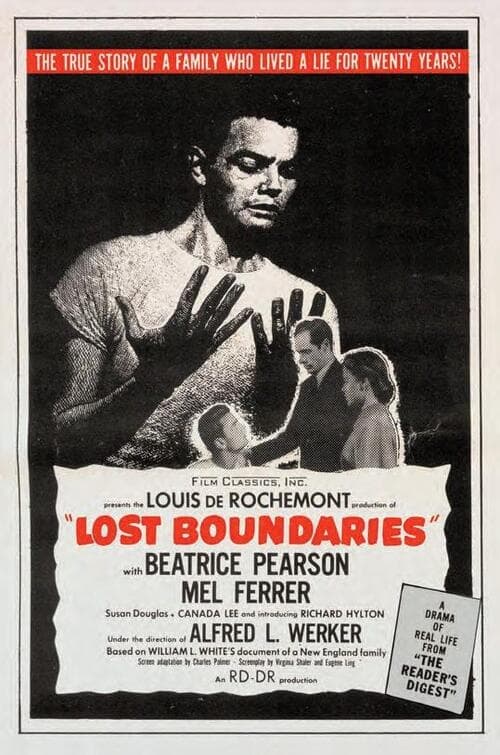
Lost Boundaries
1949
No user ratings available yet
Representation score: 3.5 out of 10

Representation Score
Fair
1949
ApprovedDirector
Elia Kazan
Runtime
102 minutes
Average Rating
No ratings yetNew Showbiz Analysis
Pinky serves as a significant historical text that disrupts the era's standard cinematic clichés of racial homogeneity. By centering the Black experience and the concept of passing, the film uses identity as a primary plot driver to critique the structural rigidity of the mid-20th century South. The film's strength lies in its willingness to confront social taboos through an interracial romance and a nuanced exploration of racial categorization. However, the film is limited by the cinematic conventions of 1949, particularly regarding its lack of LGBTQ+ representation and the absence of disability narratives. The romantic focus remains strictly straight-centered.
Category Breakdown
The film lacks LGBTQ+ characters or narratives. The central romantic storyline focuses solely on heterosexual relationships.
Pinky demonstrates a significant role in driving the story through her professional education and high-stakes identity decisions. Her intellectual mobility challenges traditional depictions of women as passive subjects within a restrictive hierarchy.
The narrative deconstructs racial binaries by centering a light-skinned Black woman navigating the complexities of passing. It uses an interracial relationship to challenge period social taboos and systemic friction.
The film critiques Southern social institutions and the racialized power dynamics underpinning them. It frames the established social order as a source of systemic oppression and volatility.
No significant depictions of physical or neurodivergent disabilities appear within the primary narrative arc.
Present on Screen
Limited or Absent
Official Synopsis
Pinky, a light skinned black woman, returns to her grandmother's house in the South after graduating from a Northern nursing school. Pinky tells her grandmother that she has been "passing" for white while at school in the North. In addition, she has fallen in love with a young white doctor, who knows nothing about her black heritage.
1949
1965

1960
1960
1938
1950
1964

1960
No reviews yet. Be the first to share your thoughts on this movie!
Use the rating form above to leave a star rating and optional review.