
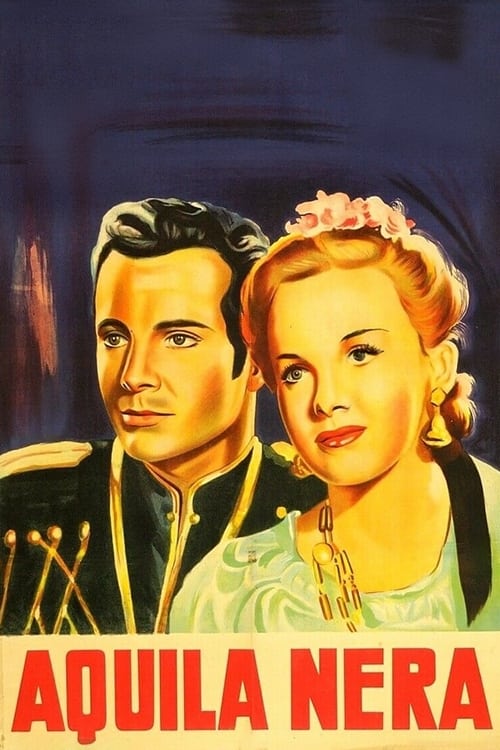
The Wife of Monte Cristo
1946
No user ratings available yet
Representation score: 5.0 out of 10
Representation Score
Minimal
1946
Director
Riccardo Freda
Runtime
97 minutes
Average Rating
No ratings yetNew Showbiz Analysis
Aquila Nera is a period adventure-romance that follows a classic restorative justice arc. The plot centers on an officer seeking vengeance against a Czarist landowner through deception and robbery. The film adheres to conventional 1940s cinematic standards, relying on individualistic vengeance and traditional gender roles. While it critiques localized power dynamics, it lacks broader critiques of social identities. Ultimately, the work functions as a traditional narrative where the protagonist's subversion of authority provides the primary source of moral complexity.
Category Breakdown
The film focuses on a traditional revenge plot centered around an officer and a landowner. There is no evidence of non-straight relationships or critiques of the assumption that everyone is straight.
The story is driven by a male protagonist embodying traditional masculine roles of vengeance. Female characters appear to serve mainly as secondary figures or plot catalysts.
Set in the Czarist era, the film suggests a European historical context. The representation leans toward the homogeneous social hierarchies typical of mid-century European period dramas.
The narrative disrupts traditional hierarchies by framing a powerful landowner as an illegitimate antagonist. This introduces moral complexity regarding the legitimacy of institutional wealth and land ownership.
There is no documented evidence of characters with visible or invisible disabilities driving the narrative or being portrayed with real power.
Present on Screen
Limited or Absent
Official Synopsis
An evil Czarist landowner had mistreated the father and friends of an officer.The officer wreaks vengeance by committing masked coach robberies and insinuates himself into his enemy's castle by pretending to be a French teacher.
1946
1964
1944
1952
1923
1940

1925

1975
No reviews yet. Be the first to share your thoughts on this movie!
Use the rating form above to leave a star rating and optional review.