
Twenty Million Sweethearts
1934
No user ratings available yet
Representation score: 1.1 out of 10
Representation Score
Minimal
1938
ApprovedDirector
W.S. Van Dyke
Runtime
114 minutes
Average Rating
No ratings yetNew Showbiz Analysis
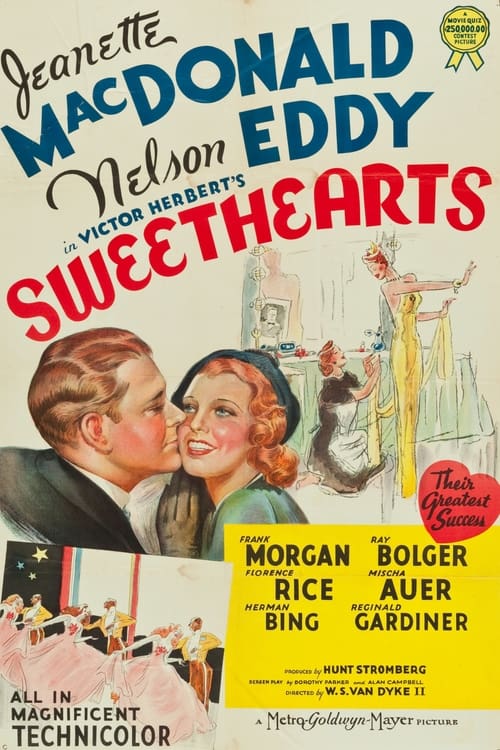
Sweethearts is a polished musical comedy that functions as a quintessential product of the Golden Age studio system. It prioritizes escapism and the reinforcement of contemporary social norms through a traditional narrative structure. The film focuses heavily on romantic reconciliation and the stability of the family unit, which prevents the story from engaging with any subversive or multi-layered themes. Ultimately, the production offers a homogeneous experience, adhering to the era's standard demographic and social frameworks without challenging established hierarchies.
Category Breakdown
The film follows a strictly straight-centered framework centered on a male and female lead. There are no depictions of same-sex intimacy or non-assuming gender matches what was assigned at birth identities.
Shirley Temple provides significant charm but her role is limited to romantic and familial duties. The narrative reinforces traditional 1930s gender hierarchies and romantic dynamics.
The cast is predominantly white, reflecting the demographic homogeneity of the 1938 studio system. The story lacks characters of color or any engagement with ethnic diversity.
The plot prioritizes Western moralism and the restoration of the nuclear family. It celebrates conventional social order and domestic harmony over any cultural deconstruction.
There are no prominent depictions of visible or invisible disabilities. Characters operate within a standard framework of physical ability typical of musical comedies.
Present on Screen
Limited or Absent
Official Synopsis
The team behind a successful Broadway production tries to stop the married stars from transitioning to Hollywood.
1934

1941
1940
1954

1951

1937

1933

1933
No reviews yet. Be the first to share your thoughts on this movie!
Use the rating form above to leave a star rating and optional review.