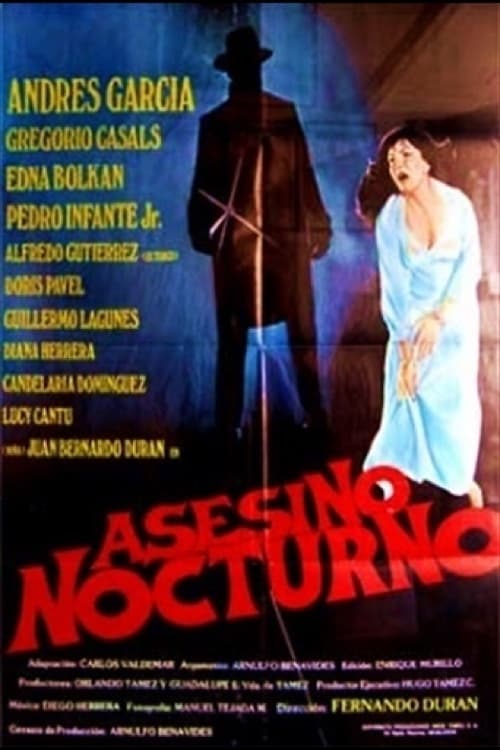
Night Killer
1987
No user ratings available yet
Diversity score: 2.6 out of 10

1990
Director
Gilberto de Anda
Runtime
92 minutes
Average Rating
No ratings yetSynopsis
Three part anthology with stories involving a Phantom of the Opera-style killer haunting a theater, four punks who pick the wrong house to rob and a man on the hunt for Bigfoot.
Overall Score
Limited
Category Breakdown
LGBTQ+ Representation
The film lacks evidence of non-cisnormative identities or narratives that critique heteronormativity. It appears to follow traditional genre archetypes common to 1990s exploitation horror.
Gender Representation
The narrative architecture relies on standard horror conventions of the period. Female characters are likely positioned as victims or secondary figures within the slasher and crime segments.
Racial & Ethnic Diversity
The film likely reflects the cultural context of Mexican genre cinema due to its director. However, specific casting details or diverse character descriptions are not provided.
Religious & Cultural Diversity
The segments function as straightforward genre exercises centered on survival. The film utilizes traditional Western horror motifs like the Phantom archetype and North American cryptids.
Disability Representation
There is no indication that neurodivergence or physical disabilities are explored with agency. Any such elements would likely serve as plot devices to heighten character otherness.
Strengths
Areas for Improvement
AI Analysis
Slaughter Night operates as a traditional genre anthology that prioritizes established horror tropes over the disruption of social or systemic norms. The three segments—a theatrical slasher, a crime narrative, and a Bigfoot hunt—function as straightforward exercises in suspense and survival. The film adheres to the conventional boundaries of 1990s exploitation cinema. It lacks the intentionality required to challenge traditional hierarchies or provide nuanced representation for marginalized groups. Ultimately, the work relies on archetypes rather than subverting them, resulting in a production that mirrors the demographic and social norms of its era and origin.
1987
1996

2014
2000

1998
1973

2018
1997
2004
2012

2005

2001
No reviews yet. Be the first to share your thoughts on this movie!
Use the rating form above to leave a star rating and optional review.